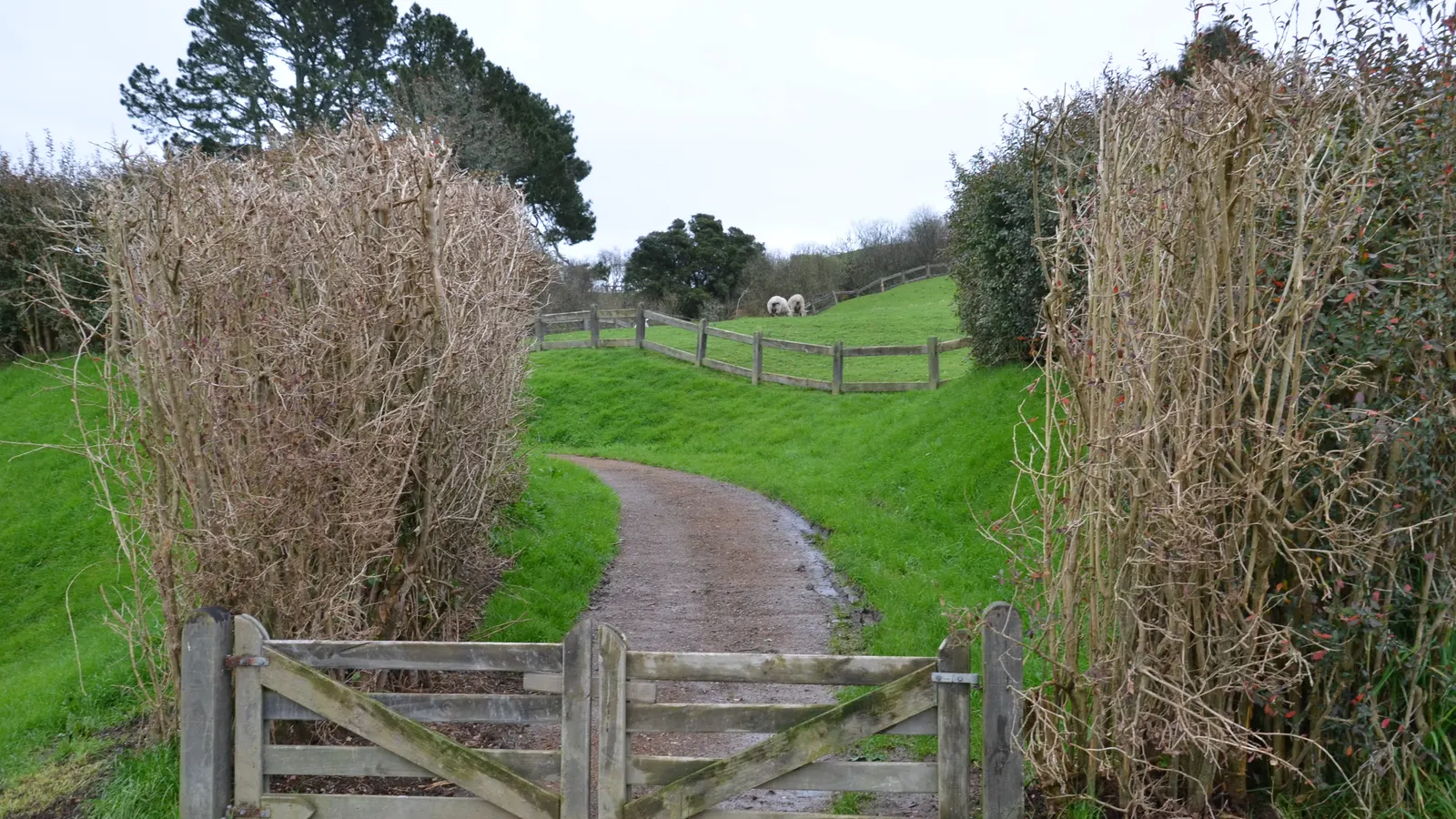
Yes, but only with the landowner's permission, and the Freedom Camping Act 2011 does not apply. That Act covers land managed by councils, DOC, LINZ and, by bylaw, NZTA, so on a farm the owner's say decides, backed by the Trespass Act 1980, which makes it an offence to stay after being warned to leave. No green warrant or council bylaw governs a paddock, but the owner can set any conditions they like.
Permission is the whole rule
Being on private land without the occupier's permission is trespass. Under the Trespass Act 1980 it becomes an offence in two ways: refusing or neglecting to leave after an occupier warns you to go, and returning within two years of a warning to stay off. The warning can be spoken or in writing, and the occupier includes anyone acting under the owner's authority, such as a farm worker or manager.
The penalty for either offence is a fine of up to $1,000 or up to three months in prison, and only the occupier or a constable can bring the charge. You must give your name and address if the occupier or a constable asks, and refusing or giving false details carries a fine of up to $500. 'Private land' in the Act includes land held under a lease or occupied by someone, so a leaseholder can say no even where the Crown owns the title.
- A yes from the occupier is the only permission that counts
- Get it before you arrive, not at the gate
- You can be warned to stay off for two years
Why the freedom camping rules mostly fall away
The Act applies to a council's own land, conservation land, LINZ land and NZTA land that a council has declared by bylaw. A farm is none of these. Southland District Council says its freedom camping bylaw applies to public places, not conservation land or private property, and that camping on private property needs the owner's consent. Christchurch says the same of its bylaw, and Auckland defines freedom camping as staying on council-controlled public land.
So the infringement fees do not apply, and the green warrant requirement does not either: nothing in the Act obliges a vehicle on a farm to be certified self-contained. An owner may still ask for it, because they may want a toilet in the vehicle. Clutha District Council notes that tent camping is allowed on private land with the landowner's permission, in contrast to its public land, where tents are limited to campgrounds and DOC campsites.
- No fixed toilet needed by law on private land
- Owners can still require a certified vehicle
- Councils' freedom camping bylaws stop at the boundary
Asking, and being asked to pay
Ask the person who occupies the land, not a neighbour or a passer-by, and say how many people, how many vehicles, how many nights and where you would park. Many farmers say yes to one or two people for a night if asked politely, and some will name a paddock or a river flat. Treat the answer as the rules for the night, and leave before you are asked.
Farm stays and online host listings turn that permission into a booking. A listing is the owner's invitation, so keep the confirmation and the directions, because gates and tracks on a farm are not signposted like a campground. If the owner charges, the arrangement is a business matter: the Camping-Grounds Regulations 1985 define a camping ground as land used, for rent or other reward, to house two or more independent parties in temporary living places, and a ground like that needs a registration from the local authority. Ask the host whether theirs is registered if you want reassurance.
- Say how many, how long and where
- Keep the host's confirmation
- Registration applies to paid grounds with two or more parties
Stock, gates and dogs
The Trespass Act treats disturbing farm animals as an offence in its own right. Disturbing horses, cattle, sheep, pigs or poultry on private land by means of a dog, a weapon or a vehicle carries a fine of up to $300 or a month in prison, and wilfully or recklessly disturbing them carries up to $500 or a month in prison. Park where the owner points, away from stock, and do not drive across paddocks with animals in them.
Leave gates as you find them. The Act separately makes it an offence for a trespasser to wilfully leave a shut gate open, or an open gate shut, on private land, with a fine of up to $200. The practical rule is the same for invited visitors: open gates stay open and shut gates stay shut unless the owner has said otherwise. Dogs belong on a lead or in the vehicle, and a farmer is entitled to refuse them.
- Park away from stock
- Leave gates as you found them
- Dogs on a lead or left at home
Fire, spray and poison on rural land
A farm is working land. WorkSafe says farmers are not responsible for the safety of people crossing non-work areas away from farm buildings, but they must manage risks from work carried out in the area, such as spraying, and visitors must take reasonable care and follow reasonable instructions. Ask about recent spraying, effluent ponds, bulls, electric fences and tracks before you set up, and accept the answer.
Fire is the owner's decision as well as the law's. Check the current fire season for the district and ask the owner before any campfire, and rely on a gas cooker when in doubt. DOC's pest control on conservation land uses 1080 with warning signs at track entrances, and DOC says dogs are highly susceptible to it, so a farm that borders conservation land is worth asking about before you bring a dog. On private land, laying poison or setting traps without the occupier's authority is an offence.
- Ask about spraying, ponds and electric fences
- Use a gas cooker unless the owner says otherwise
- Check for 1080 warnings near conservation boundaries
Water, waste and weeds
Farm water is usually untreated. DOC's own guidance for campsites says untreated water should be boiled before use, and the same sensible rule applies to a farm tank or stream. Carry your own drinking water and ask which source, if any, is meant for people.
Take rubbish with you, empty tanks at a public dump station before you arrive rather than after you leave, and use a toilet on board or ask the owner where to go. Clean gear matters on rural land: DOC asks campers to clean tents and gear between locations to stop weeds, mud and pests being carried from place to place.
- Boil or treat untreated water
- Take every item of rubbish out
- Clean tents and footwear between locations
Māori land, marae and land that only looks public
Māori freehold land is privately owned land. The Māori Land Court can hear claims for damages for trespass to it and can grant injunctions against actual or threatened trespass on Māori land or a Māori reservation, and marae and iwi campgrounds set their own terms. Ask the people who look after the place, pay any koha they request, and follow the tikanga they describe. The Freedom Camping Act also preserves rights of occupation such as nohoanga entitlements, which belong to the people who hold them.
Some land looks public but is not. LINZ land is closed to freedom camping unless a LINZ notice permits it, and a notice may not permit it on LINZ land held under a Crown lease or licence. High-country stations and similar leased land are therefore the leaseholder's to allow or refuse, with no right to camp for the public. A gate with no sign is not an invitation.
- Ask the marae or iwi organisation first
- Koha is a gift, not a discount
- Leased Crown land needs the leaseholder's yes
If you are told to leave, and what to do instead
If the owner says no, or asks you to go, leave calmly and promptly, and do not argue at the gate. Staying after a warning is an offence under section 3, and a written or spoken warning to stay off lasts two years. A trespass warning is the owner's tool and is usually avoided by a polite exit.
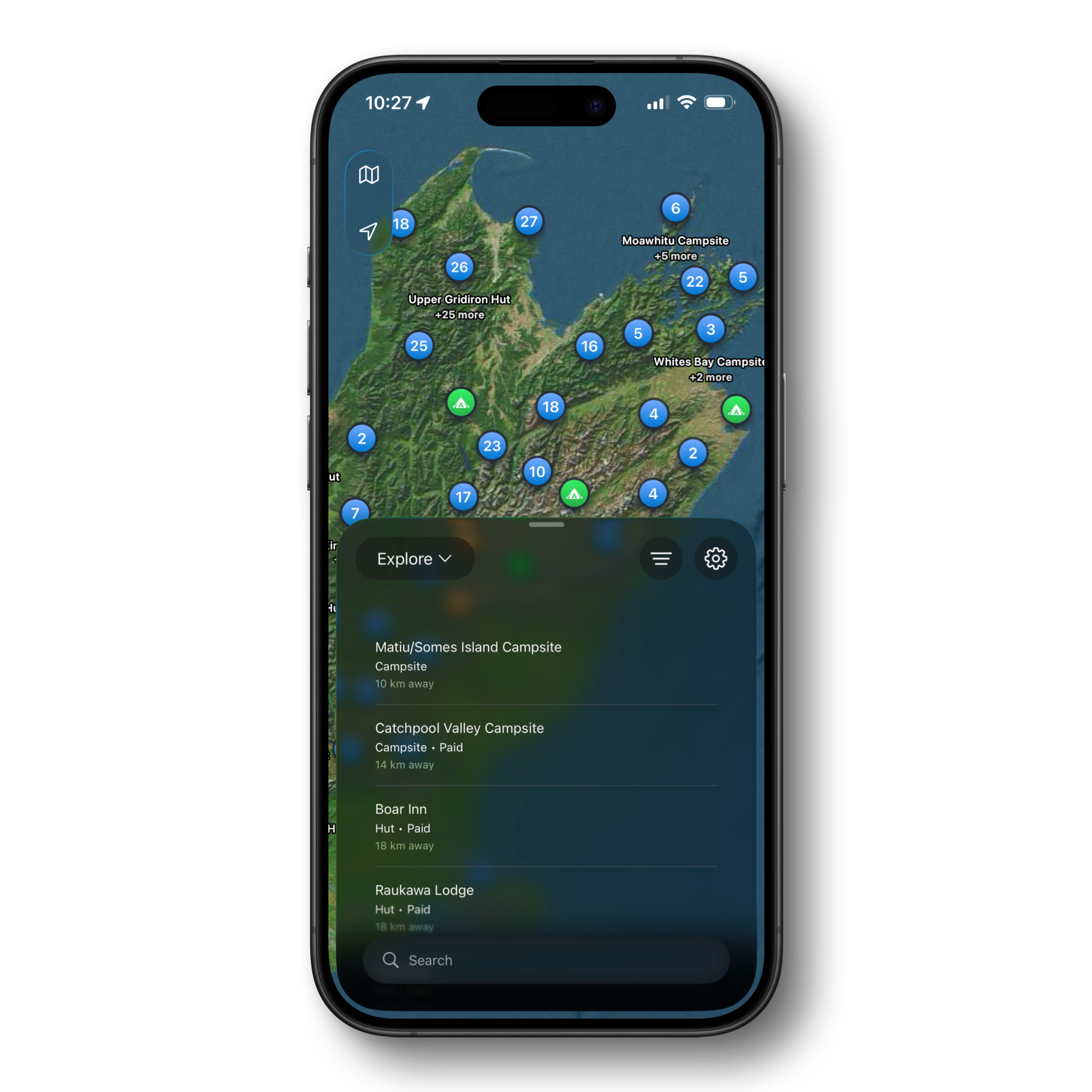
Have a fallback before you ask: a holiday park, a DOC campsite or a council site your vehicle qualifies for. In the KiwiCamping iPhone app, saved places can hold a host's address and gate notes beside the nearest DOC campsite or dump station, and filters help find that alternative. Saved places, place details and guides work without signal, but map tiles, routing, weather and photos need it, so write the access instructions down before the track turns to gravel.
- Leave when asked
- Have a backup within an hour of arriving
- Save the host's directions before signal drops
The short version
Private land is the one place the freedom camping rules do not reach, and the owner's permission is the rule. Ask first, follow the conditions the owner sets, look after gates and stock, and treat any refusal as final.
Treat a farm as a workplace and a favour rather than a campground, keep a backup site in mind, and the night usually goes well for everyone involved.
Places along the way
Check before you go
Rules and conditions change. Recheck the official source and the page for your exact park or campground before departure.
- Trespass Act 1980
- Freedom Camping Act 2011
- Camping-Grounds Regulations 1985
- Te Ture Whenua Maori Act 1993, sections 18 and 19
- WorkSafe: Visitors and events on farms
- Southland District Council: Freedom camping need to know
- Clutha District Council: Camping in Clutha
- Christchurch City Council: Camping and campervans
- Auckland Council: General rules for freedom campers
- DOC: 1080 and dogs
- DOC: How to be a low impact camper
- DOC: Campsite categories, facilities and fees
Common questions
Can I camp on private land in NZ?+
Yes, if the occupier gives you permission. The Freedom Camping Act applies to public land managed by councils, DOC, LINZ and, by bylaw, NZTA, not to private farms. Without permission you can be warned to leave under the Trespass Act 1980, and refusing or returning within two years is an offence with a fine of up to $1,000 or three months in prison.
Do I need a self-contained vehicle to camp on a farm?+
Not by law. The green warrant requirement belongs to the Freedom Camping Act, which does not apply to private land. The owner may still ask for a certified vehicle, a toilet or a particular spot, so ask what they require before you arrive and follow it.
Can I camp on a farm if I pay?+
Yes, if the owner agrees. A farm that charges rent or other reward to two or more independent parties for camping falls within the Camping-Grounds Regulations 1985 definition of a camping ground, which usually means registering with the local council. A paid booking through a host listing is still a permission, so keep the confirmation.