Waste is where responsible camping becomes concrete, and where the penalties get serious. Discharging toilet or grey water in the wrong place carries substantially higher fines than an ordinary freedom camping infringement, and it is the behaviour most likely to get a popular site closed permanently.
Know your three waste streams
Black water is toilet waste and goes only into a dump station inlet designed for it. Grey water is everything from the sink and shower, it contains food particles, soap, fats and bacteria, and despite looking harmless it is not something to tip on the ground. Solid rubbish is the third stream and generally has to leave with you.
Treat all three as containment problems rather than disposal problems. The question on the road is not where you can get rid of something, but whether you have capacity to hold it until you reach the right facility.
- Grey water is not clean water
- Plan capacity, not disposal
- Rubbish usually leaves with you
Finding a dump station
Dump stations are widely distributed across New Zealand, at holiday parks, council facilities, some service stations and many i-SITEs, and most are free or charge a small fee. They are mapped, and the sensible habit is to identify the next one on your route before you need it rather than searching when a tank is already full.
Facilities at holiday parks are often available to non-guests for a small charge, which is worth knowing on a long remote leg. Some are locked overnight, so arriving at 11pm with a full cassette is a planning failure rather than bad luck.
Using one correctly
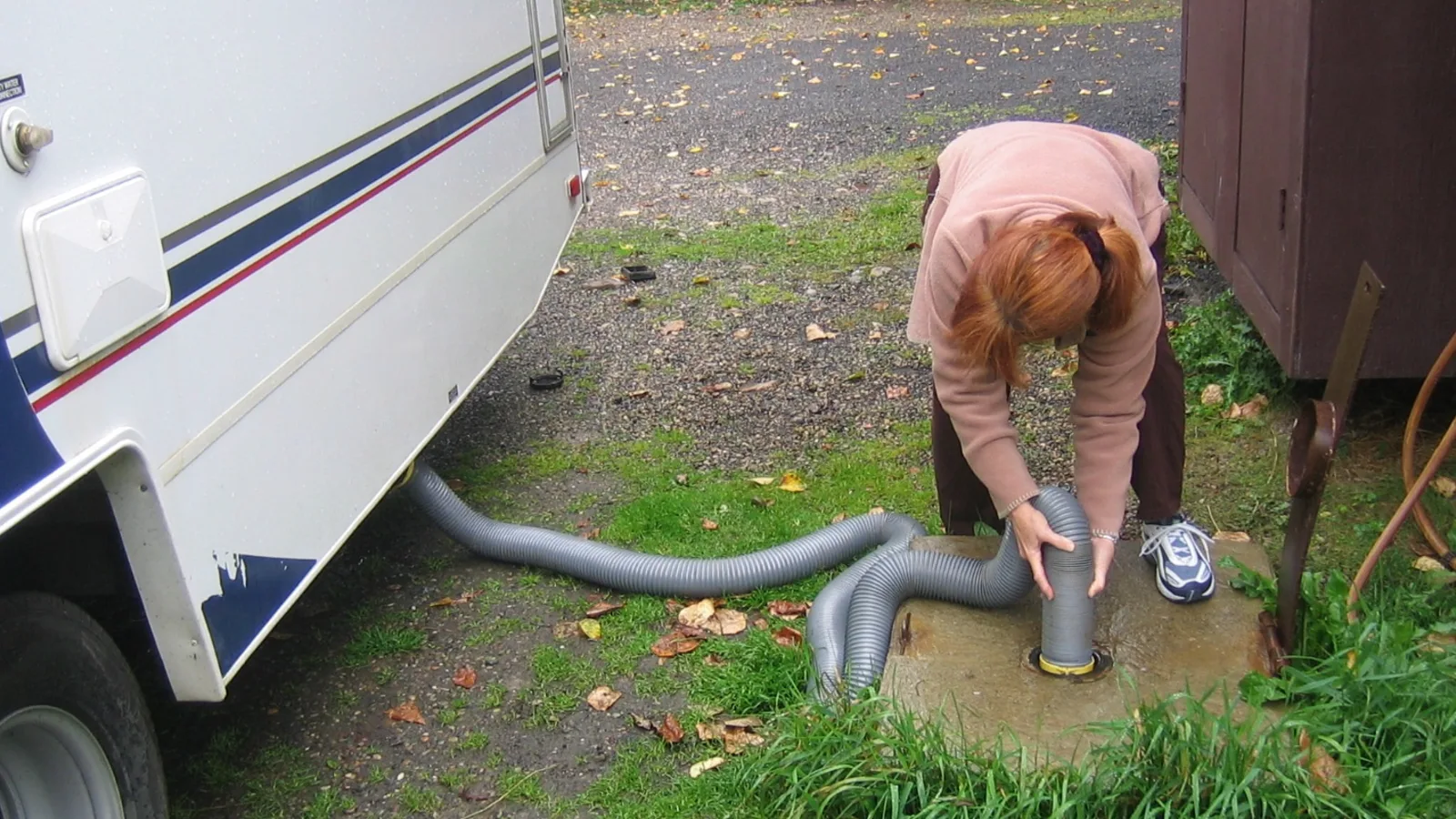
Park so other vehicles can still pass, dump stations are frequently on a single access lane and a badly parked van blocks everyone. Use only the inlet marked for the waste you are emptying, empty black water first, then rinse, then grey water. Rinse without spraying the surrounding ground, and leave the area cleaner than you found it.
Keep the drinking-water hose entirely separate from anything used at the dump point, and never fill fresh water from a tap at the dump station unless it is explicitly marked potable. Wash your hands afterwards, before touching anything in the vehicle.
- Black water first, then rinse, then grey
- Keep hoses strictly separate
- Never fill drinking water at the dump point
What not to do, and why it costs
Stormwater drains discharge directly to waterways with no treatment, so emptying a tank into one is a discharge to the environment rather than to a sewer. Public toilets are not designed for cassette volumes and block. Emptying into a hedge, a bush or a stream is the offence that draws the largest penalties and the most attention.
Use only treatment chemicals compatible with the receiving system. Many rural dump stations feed septic tanks, and harsh formaldehyde-based products damage the biological process that makes them work. Where you are unsure, choose a product marked as septic-safe.
Rubbish and food waste
DOC accommodation terms generally require all rubbish to leave with you, and many council sites operate pack-in, pack-out even where a toilet is provided. Assume there is no bin unless you can see one, and carry a sealed container so food waste does not attract birds, rodents or possums overnight.
Food scraps are not a free pass because they are organic. Left in the bush they spread seeds, alter animal behaviour and take far longer to break down than people assume. Do not burn plastic, foil or treated timber in a campfire, it produces toxic smoke and leaves residue that the next camper inherits.
- Assume no bins
- Seal food waste overnight
- Never burn plastic or treated wood
Building it into the routine
The travellers who never have a waste problem are the ones who empty on a schedule rather than on demand, typically whenever they pass a facility with tanks more than half full, regardless of whether it feels necessary. That single habit removes almost every awkward situation.
Know your capacity in days: how long the fresh water lasts, how long before grey water needs attention, how many days the toilet supports at your party size. Those three numbers determine how far off-grid you can genuinely go, and they are more useful than any tank specification in litres.
Places along the way
Check before you go
Rules and conditions change. Recheck the official source and the page for your exact park or campground before departure.
Common questions
Where can you empty a campervan toilet in New Zealand?+
At a public dump station, at most holiday parks, and at some council facilities. Emptying a cassette into a public toilet, a storm drain or the bush is illegal and carries one of the larger infringement fees.
Can you pour grey water on the ground?+
No. Sink and shower water carries detergent and food waste and must go to a dump station or a holiday park's grey water point, which is why self-containment certification requires a waste tank rather than a bucket.
Take it on the road
Save the stops. Plan the whole trip.
Build an ordered route from saved places, calculate the distance and keep dates, notes and to-dos attached.