A stable caravan depends on the legal combination, correct loading and a driver who slows before the road demands it. New Zealand's curves and wind make the maximum permitted speed irrelevant on many sections.
Know the combination
Check the tow rating, coupling, safety chain, lights, tyres, brakes and loaded weights for both vehicles. Account for water, gas, bikes and equipment added after the empty specification.
Passengers cannot travel inside a caravan on the road. Everyone belongs in an approved restrained seat in the tow vehicle.
Speed and spacing
The maximum open-road speed while towing is 90 km/h with a rigid connection such as a towbar. With a rope or other non-rigid connection the limit is 50 km/h on any road. Travel slower whenever stability, visibility, weather or the road requires it.
Leave at least a four-second gap, with more in bad weather. Brake before corners and select a lower gear for descents.
Share narrow roads
Use safe pull-over areas to let following traffic pass and approach one-lane bridges only when the full combination can clear.
Strong wind, trailer sway or hot brakes require a stop. Do not attempt to recover lost itinerary time by increasing speed.
Towing speed limits are lower
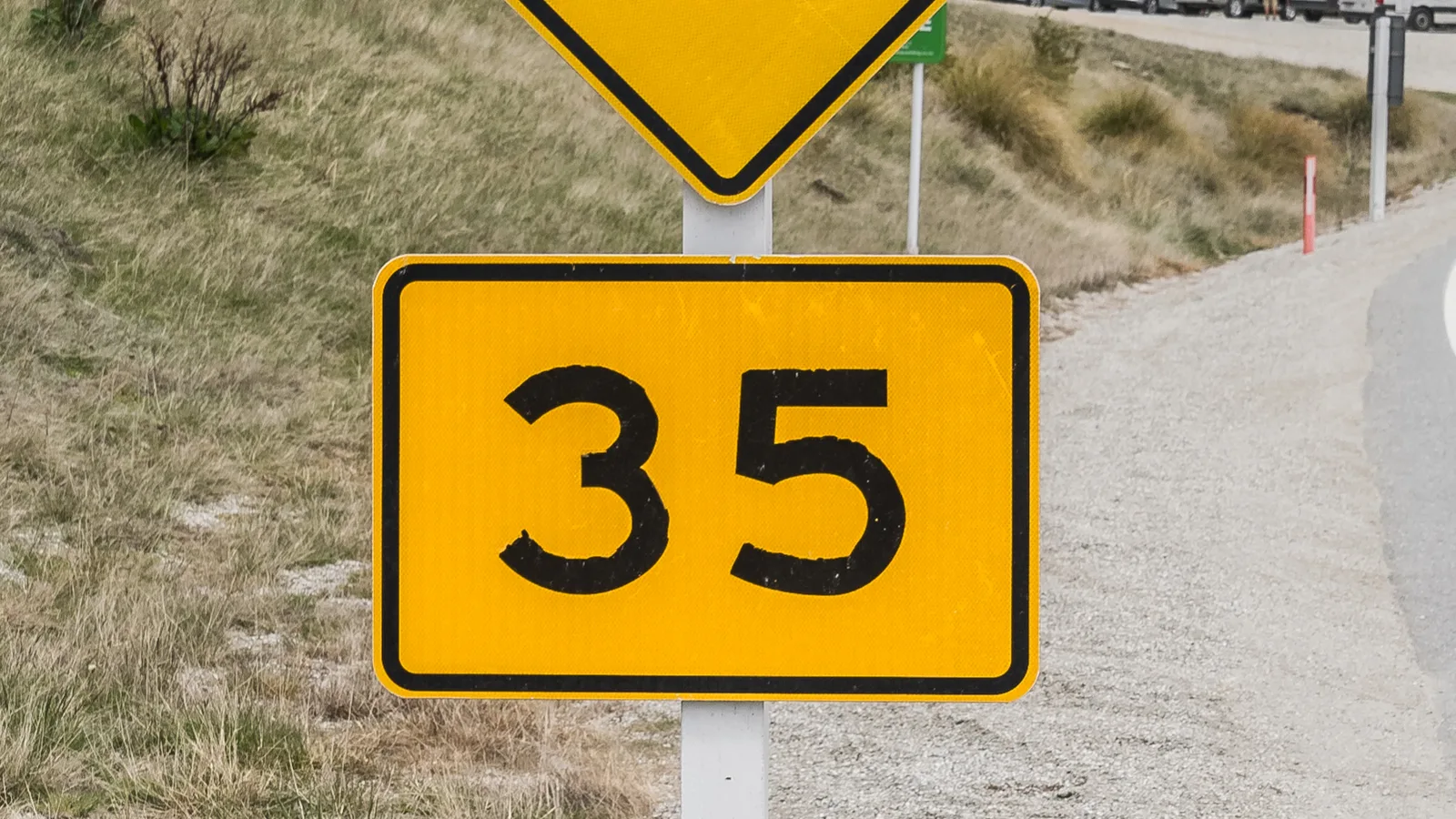
Light trailers and caravans are limited to 90 km/h on the open road, below the 100 km/h general limit, and heavy trailer combinations are also capped at 90 km/h. It is a maximum, not a target: where a lower limit is posted, the lower limit applies.
Leave a much larger following gap than you would in a car. Braking distance increases substantially with a trailer, especially on long descents.
- 90 km/h maximum when towing
- Braking distance increases sharply
- Bigger following gap than a car
Weights, ratings and loading
The tow vehicle's maximum towing capacity, the towbar rating, the caravan's gross laden weight and the tow ball download all have to agree, and the limiting figure is whichever is lowest. Exceeding any of them affects handling, braking and insurance.
Load heavy items low and over the axle, keep roughly ten percent of the weight on the tow ball, and avoid loading the rear of the caravan, which is what causes sway. Check the load again after the first hour of driving.
Sway and how to respond
Sway usually starts from a crosswind gust, a passing truck or too little tow ball weight, and it builds rather than settling. The instinct to brake hard or steer against it makes it worse.
Ease off the accelerator gently, keep the steering straight, and let the combination slow itself. If your vehicle has a trailer brake controller, applying the trailer brakes alone can pull the combination straight. Then stop and check the loading.
- Ease off, do not brake hard
- Keep the steering straight
- Stop and recheck the load after
Roads to think twice about
Tākaka Hill, the Crown Range, Remutaka Hill Road, the unsealed 309 Road and much of the Coromandel coast are steep, tight and slow with a caravan, and Remutaka Hill (SH2) closes in severe wind. Check road conditions and any restrictions before committing, since turning around is often not possible.
On descents, select a lower gear and use engine braking rather than riding the brakes, which fade. Pull over regularly to let following traffic past, both as courtesy and because a queue behind you creates overtaking risk.
Reversing, parking and campgrounds
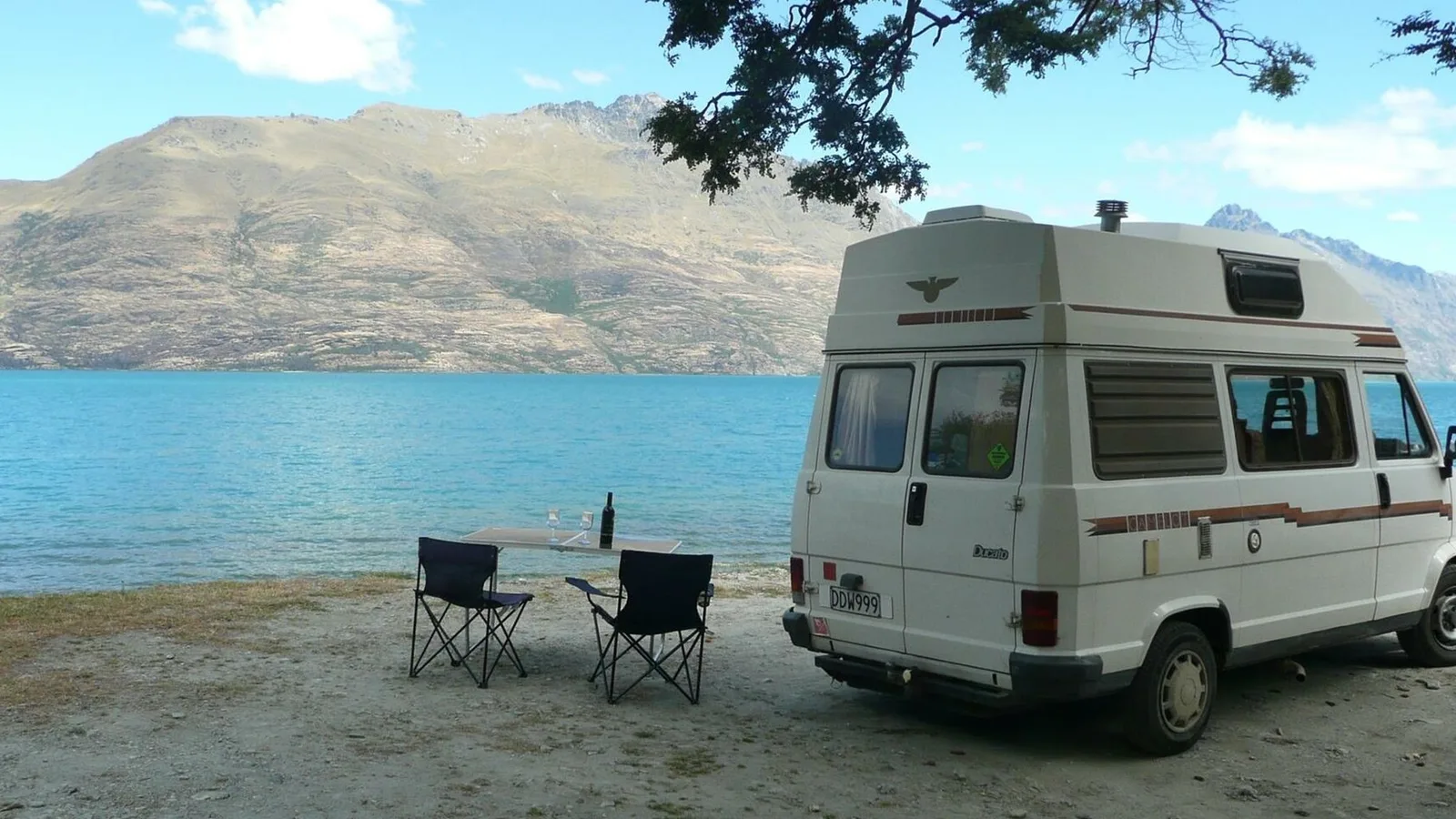
Practise reversing in an empty car park before the trip. Campground sites frequently require a reverse into a defined space with neighbours close on both sides, and doing that for the first time with an audience is how people damage vans.
Book sites that suit your combination length and say you are towing when you book. Many holiday parks keep specific drive-through sites, and getting one removes most of the difficulty from arrival.
Unhitching gives you an ordinary vehicle for day trips and is worth doing whenever you stay more than one night. Use wheel chocks and levelling ramps, and check the handbrake holds before disconnecting anything.
Wind and exposed roads
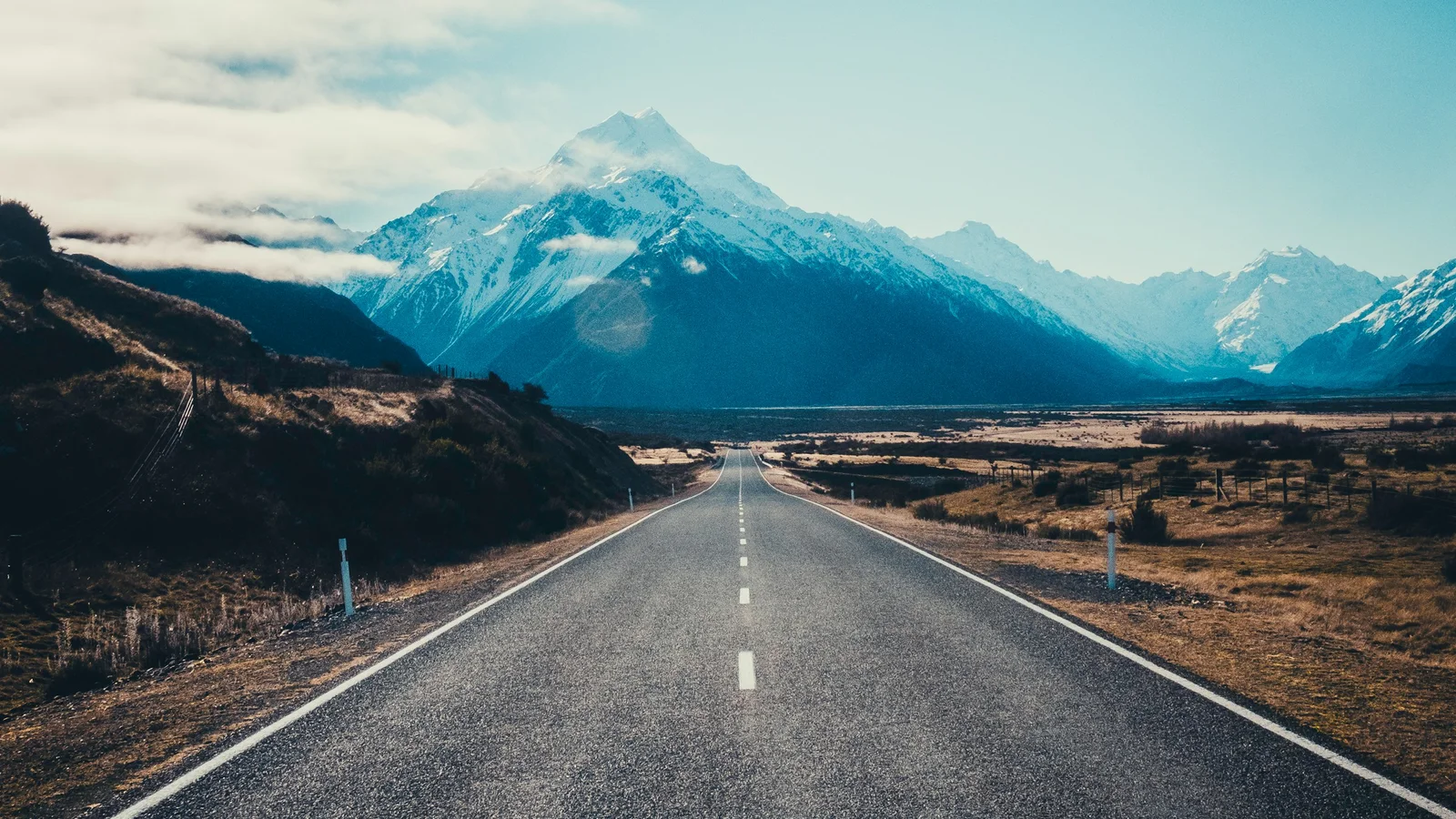
A caravan is a large flat surface and crosswind is a major cause of sway and loss of control while towing. Exposed sections around Wellington, the Desert Road, the Mackenzie and coastal Canterbury are all known for it.
Slow down before exposed sections rather than reacting within them, and take particular care when emerging from a cutting or passing a truck, where the wind loads and unloads suddenly.
- Crosswind is the main towing hazard
- Slow before exposed sections
- Trucks cause sudden gusts
Μέρη στη διαδρομή
Έλεγξε πριν φύγεις
Οι κανόνες και οι συνθήκες αλλάζουν. Έλεγξε ξανά την επίσημη πηγή και τη σελίδα του συγκεκριμένου πάρκου ή κάμπινγκ πριν αναχωρήσεις.
Συχνές ερωτήσεις
What is the speed limit when towing in New Zealand?+
90 km/h on the open road with a towbar or other rigid connection, below the 100 km/h general limit, and any lower posted limit still applies. Towing on a rope or any other non-rigid link drops the limit to 50 km/h everywhere.
Do you need a special licence to tow a caravan in New Zealand?+
Not usually. A full car licence lets you tow when the vehicle, trailer and load together weigh no more than 6,000 kg; on a learner or restricted licence the limit is 4,500 kg. Rental agreements can set their own lower limits.
Πάρ' το μαζί σου στον δρόμο
Αποθήκευσε τις στάσεις. Σχεδίασε όλο το ταξίδι.
Φτιάξε μια διαδρομή σε σειρά από αποθηκευμένα μέρη, υπολόγισε την απόσταση και κράτα ημερομηνίες, σημειώσεις και εργασίες συνδεδεμένες.