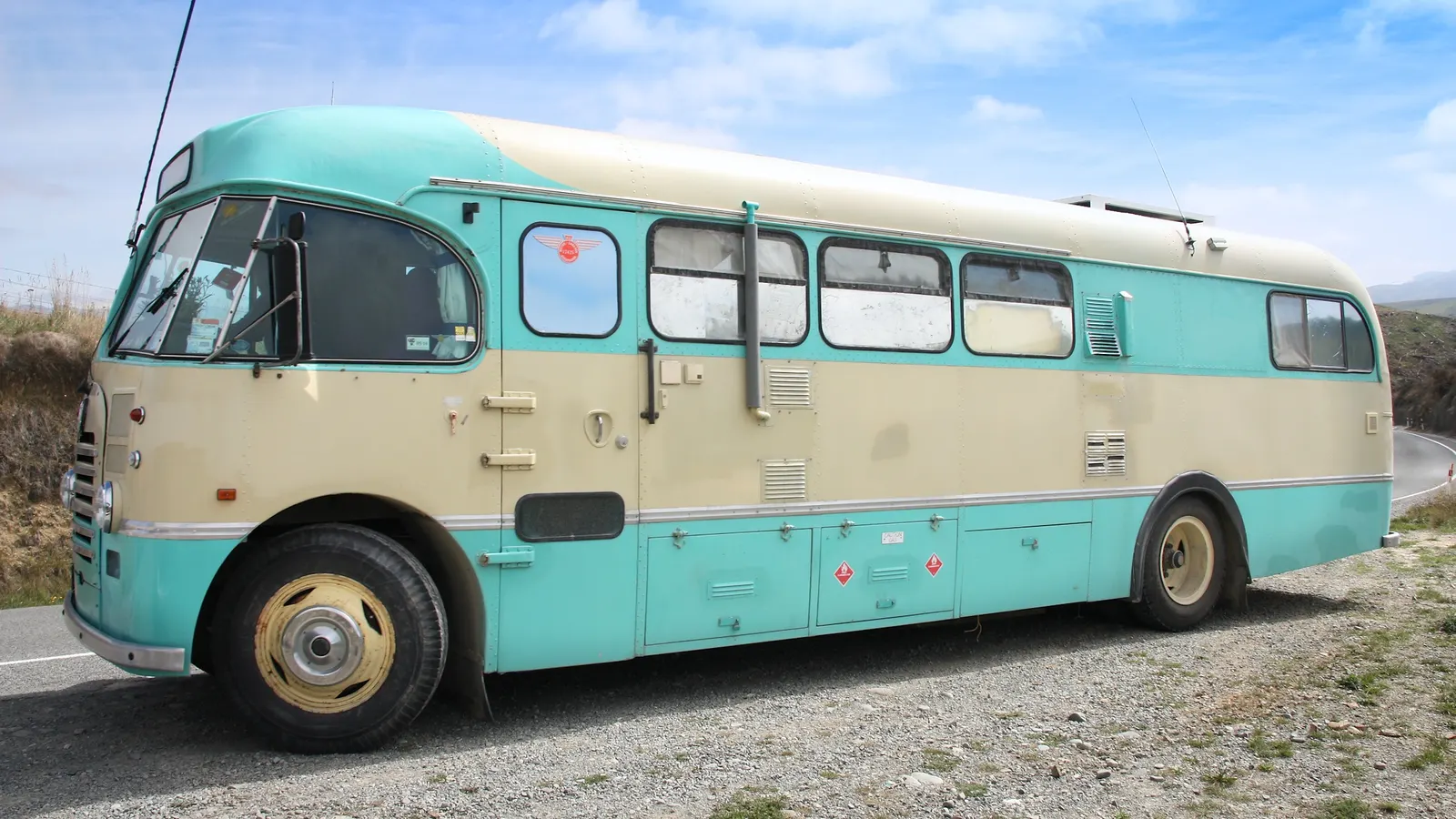
It depends on the council and the street, and the answer is yes only for a certified self-contained campervan. Under the Freedom Camping Act 2011 each council decides by bylaw which of its streets allow overnight stays, which restrict them and which ban them, and a van without a green warrant cannot stay on a council street unless the bylaw names the spot. Ordinary parking rules such as time limits and clearways still apply on top, and since 7 June 2026 only a green warrant counts as self-contained.
A street belongs to someone, and that decides it
A council road counts as a local authority area under the Act, so the council's bylaw applies. Under section 10, a certified self-contained vehicle may freedom camp in a local authority area unless the bylaw restricts or prohibits it, and a vehicle that is not self-contained may only do so where a section 11A bylaw says so. That default is why some cities permit roadside nights almost everywhere while others ban them street by street.
State highways are different. NZTA land is covered by the Act only if a council has declared it a local authority area by bylaw, which needs NZTA's written consent. Elsewhere the NZTA's own powers over its land stand, so a highway shoulder or lay-by is not a safe assumption. A council can also make rules for its roads that sit outside the Act, such as time-limited parking, which is why a street can be legal for camping yet still carry a parking ticket.
- Council roads follow the council's bylaw
- State highway land is rarely open
- Parking rules sit on top of camping rules
Auckland, Wellington, Christchurch and Queenstown
Auckland starts from permission. Certified self-contained vehicles can stay on most council-controlled public land, including most roadsides, for a maximum of two nights in the same road or off-road parking area, must vacate by 9 am on the day they leave, and cannot return to the same area for two weeks from 9 am on the day of departure. The bylaw prohibits freedom camping at 58 named areas, restricts 20 more with extra rules, and does not allow tents in public places. Waiheke has no public dump station, so the limit there is two nights and you must leave the island on the third day.
Wellington City allows certified self-contained vehicles but not in a single place for long: no more than four consecutive nights in a calendar month in any one area, and not within 500 m of an area where you have already stayed four nights. On-street parking is listed as a free option if you keep within any time limits, and the council's designated sites include 52 spaces at Evans Bay Marina and 16 at the Te Kopahou Visitors Centre car park. The Barnett Street car park next to Te Papa offers paid overnight parking to self-contained vehicles, except on Saturday nights.
Christchurch prohibits freedom camping on all council land in its central city, bounded by Bealey, Fitzgerald, Moorhouse, Deans and Harper avenues and Little Hagley Park, and in much of Akaroa. Elsewhere it allows certified vehicles in the areas its map marks for two nights, and within the City Coastal Restricted Zone any roadside works if you follow the limits of four nights in 30 days and no more than two in one place. Queenstown Lakes' Freedom Camping Bylaw 2025 prohibits it in urban areas, including on-road parking, and allows certified vehicles at designated car parks and on some rural roads.
- Auckland: two nights, out by 9 am
- Wellington: four nights a month per area
- Queenstown: urban streets are prohibited
Car parks: council, paid and supermarket
A council car park is council land, so the same bylaw applies, and many are excluded. Auckland says you cannot freedom camp in car parks where parking is reserved or where a fee is charged, such as council parking buildings, and Auckland Transport's car park terms state that overnight camping is prohibited. Wellington bans camping on land managed under the Reserves Act, which the council says includes a number of coastal and sports-field car parks.
A supermarket, shopping centre or pub car park is private land, so the Act does not apply and the owner's terms do. The owner or manager can ask you to leave, and under the Trespass Act 1980 a person who neglects or refuses to leave after being warned commits an offence. A sign saying no overnight parking is the owner's rule, and a manager's yes is not something to assume.
- Paid or reserved council car parks are usually out
- Private car parks follow the owner's signs
- Ask the manager, and take no for an answer
Time limits, clearways and the road rules underneath
Camping permission does not suspend the road rules. Under the Land Transport (Road User) Rule 2004, a driver must not stop or park on a road without due care and reasonable consideration for other road users, or contrary to a sign or marking that prohibits, limits or restricts parking. Parking on a footpath is also prohibited, and so is obstructing a driveway, with a vehicle parked within 1 m of the prolongation of a driveway's side treated as obstructing it.
Parking within an intersection or within 6 m of one is prohibited unless signs or markings allow it, so a corner is a poor place to park a long van. Auckland points out that freedom campers must follow parking and road rules such as time limits and clearways, and the council's rules on noise, litter and fires. Park as the markings direct, keep awnings, chairs and tables inside the vehicle, and leave space for other drivers.
- Time limits and clearways still apply
- Keep 6 m clear of intersections
- Do not block a driveway
What it costs, and who gets the ticket
Camping where a bylaw prohibits or restricts it, or camping in a vehicle that is not self-contained, is a $400 infringement on council land, and so is staying with more people than the vehicle is certified for. Failing to display a warrant card is $200, refusing to leave when an officer requires it is $600, and damaging the area or leaving waste outside a bin is $800. Christchurch says it checks the warrant card in the front windscreen, the certificate or the Self-Contained Motor Vehicles Register.
A freedom camping infringement is separate from a parking ticket, and both can arrive for the same night. Wellington lets you pay or dispute a freedom camping fine through a service desk or email, and says it will only issue a waiver in special circumstances.
A rental company can pass a notice on to the hirer. A hire agreement may make you liable for the fee and an administration charge, and if it authorises a card debit the company must send you a copy of the notice within five working days of receiving it before charging the card.
- $400 for a non-certified van on council land
- Parking tickets are separate
- Rentals pass notices to the hirer
Dump stations, toilets and leaving a street clean
Councils judge a street stay by what it leaves behind. Auckland says the law requires you to dispose of human waste and grey water properly and to look for the blue dump station symbol, and Wellington lists public dump stations at Evans Bay Marina and Ngauranga Gorge. Christchurch says to empty a toilet only at a dump station and not to go to the toilet beside the road, on the ground, in the bush or on a beach.
Empty your tanks before you park rather than after, take rubbish with you or use a council bin, and do not spread out across several bays. Christchurch's bylaw prohibits taking more than one parking space with a camping vehicle, equipment or activities.
- Empty tanks before parking
- One vehicle, one space
- Use a dump station, not the roadside
When the street says no
If the street is banned, restricted or full, move on rather than squeezing in. Holiday parks and camping grounds are the usual answer for a van that is not certified, and Auckland tells people without a self-contained vehicle to use campgrounds that provide suitable facilities. DOC campsites near towns are another option, and each page states its own rules.
Paid overnight parking is an option for certified vehicles in some cities, such as Wellington's Barnett Street car park, whose price differs between two council pages at $30 and $35 per 24 hours, so check the current rate. Pick the next site before dark so a full lay-by never turns into a ticket.
- Holiday parks take non-certified vans
- Paid city sites can be a good fallback
- Choose your next stop before dark
Checking a street before you stay
Look for the signs, photograph them, and compare them with the council's page or bylaw map for that district, written the evening before. A street that was legal last year may now be in a prohibited area, and temporary restrictions can appear on the ground before any listing changes.
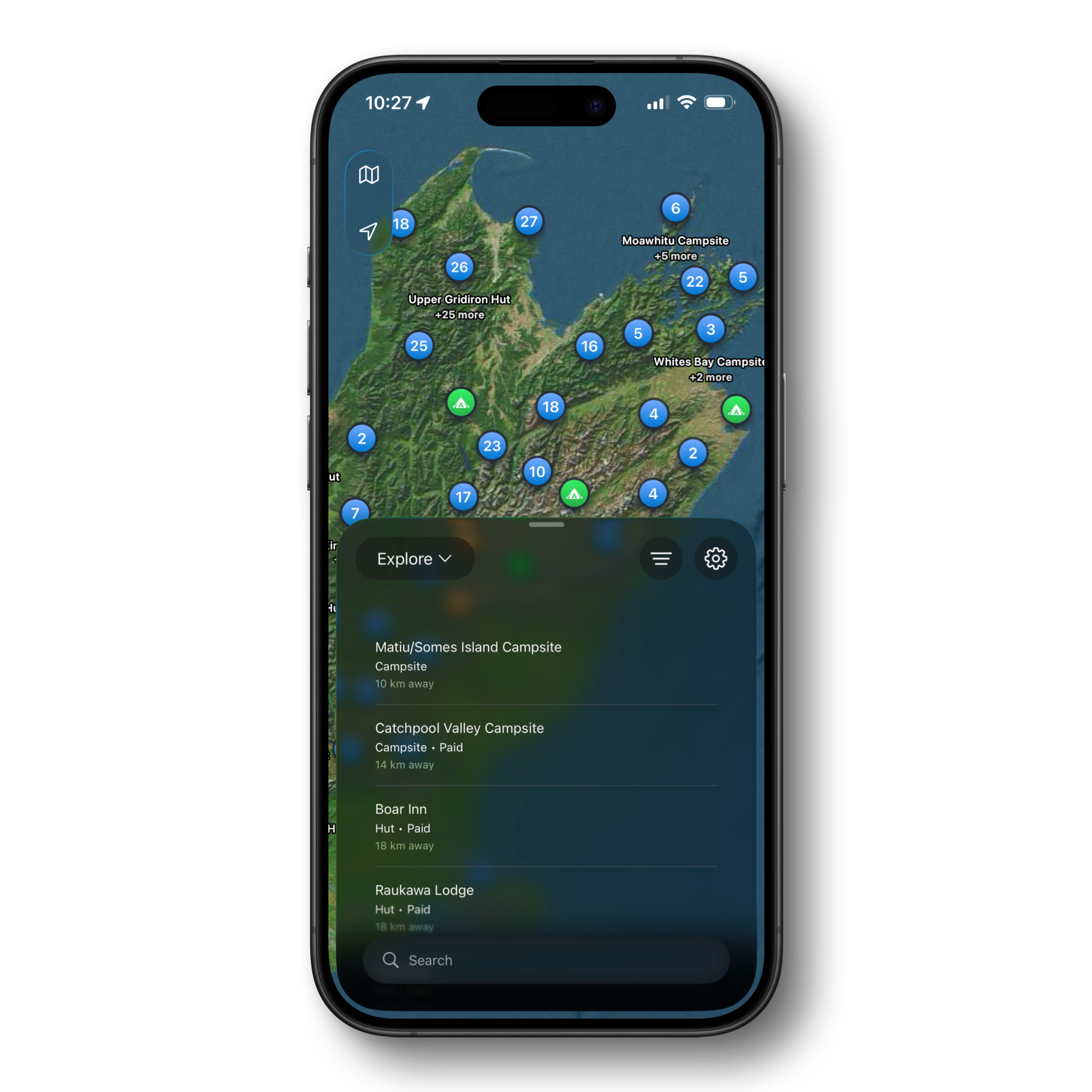
KiwiCamping, an iPhone app, keeps DOC campsite and hut data, dump stations, saved places, filters and trips in one place, and shows DOC's freedom-camping notices by district, which cover conservation land, not council streets. Place details, saved places and guides work without signal, but map tiles, routing, weather and photos need it, so save the alternatives you might want. The council's bylaw map is the source for a street.
- Photograph the sign on arrival
- Council page first, then your app
- Pre-select a second option
The short version
A certified self-contained campervan can stay overnight on some council streets for a night or a few, and not at all in many urban centres. A van without a green warrant needs a campground, a named non-certified site or private land with permission.
Read the sign, check the council's rules the evening before, empty your tanks, and keep the next site in mind in case the street is full.
Places along the way
Check before you go
Rules and conditions change. Recheck the official source and the page for your exact park or campground before departure.
- Freedom Camping Act 2011
- Freedom Camping (Penalties for Infringement Offences) Regulations 2023
- Land Transport (Road User) Rule 2004
- Trespass Act 1980
- Auckland Council: General rules for freedom campers
- Auckland Transport: Car park terms and conditions
- Wellington City Council: Freedom camping in Wellington
- Wellington City Council: Waterfront car park areas
- Christchurch City Council: Camping and campervans
- Christchurch City Council: Freedom Camping Bylaw 2021
- Queenstown Lakes District Council: Responsible camping
Common questions
Can I park my campervan on the street in New Zealand?+
Only where the council's bylaw allows it and your van is certified self-contained with a green warrant. Auckland allows it on most council roads for up to two nights, Wellington allows it with limits, and Queenstown Lakes prohibits it on urban streets. A van without a green warrant needs a campground or a site the council has named for it.
Can I park a campervan overnight in a supermarket car park in NZ?+
A supermarket car park is private land, so the Freedom Camping Act does not apply and the owner sets the rules. If the signs prohibit overnight parking or a manager asks you to leave, you must go, because refusing after a warning is an offence under the Trespass Act 1980. Ask the manager first.
How long can a campervan stay in the same street in NZ?+
It varies by council. Auckland allows two nights in the same road or off-road parking area and bars a return for two weeks from 9 am on departure day. Wellington allows no more than four consecutive nights a calendar month in any one area, and Christchurch's coastal zone allows four nights in 30 days with no more than two in one place.