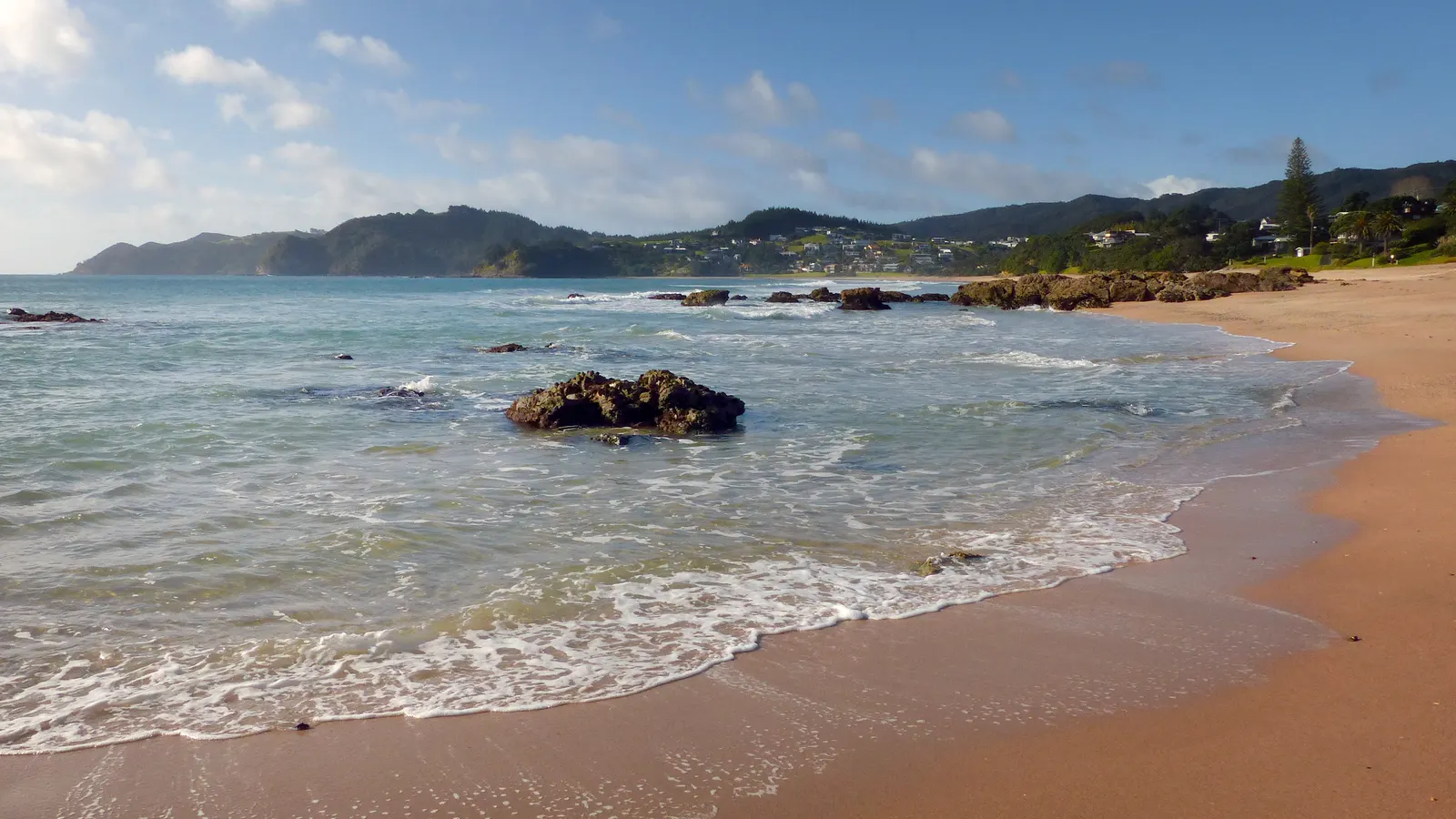
Usually not, and it depends on who manages the car park, reserve or road beside the sand. Freedom camping is lawful only where the Freedom Camping Act 2011, a council bylaw or a DOC notice allows it, so many beach car parks and reserves ban overnight stays, some allow certified self-contained vehicles for a few nights, and a few use permits or ballots. A beach is not a special category with a rule of its own, and a blue warrant has not counted since 7 June 2026.
A beach has no rule of its own
The Freedom Camping Act 2011 treats camping within 200 metres of the mean low-water springs line of the sea or a harbour as freedom camping, the same as within 200 metres of a formed road. Which rule applies then depends on who controls the land you are standing on: a council, DOC, LINZ or, if it is private, an owner whose permission you need.
That is why neighbouring beaches can have opposite answers. Council reserves are caught by section 44 of the Reserves Act, which bars personal accommodation on a reserve without the Minister's consent. DOC lists its own banned and restricted car parks, and LINZ land is closed to freedom camping unless a LINZ notice permits it. Coastal roads and car parks outside reserves are the places a council bylaw usually decides.
- Find the manager first, then the rule
- Reserves are closed unless a campsite is provided
- The sign beats any listing
Three councils on the coast
Christchurch has a City Coastal Restricted Zone running from Waimairi Beach to South New Brighton, including North Beach, North New Brighton and New Brighton. Inside it, only certified self-contained vehicles may camp, for no more than four nights in any 30 days and no more than two in one place, with the second spot at least 500 m from the first. Some coastal sites are fully prohibited: the New Brighton north and south ramp car parks, the Southshore Spit, and the North Beach car park from 7 pm Friday to 7 pm Sunday between 1 October and 1 May.
Wellington City bans camping on all land managed under the Reserves Act 1977 and the Wellington Town Belt Act 2016, which the council says includes a number of coastal car parks. Its designated sites for certified self-contained vehicles include the Evans Bay Marina car park on the harbour and the Te Kopahou Visitors Centre car park on the south coast, which is not suitable for vehicles over 7 m or caravans.
Auckland allows certified self-contained vehicles on most council roadsides and car parks but prohibits freedom camping at 58 named areas, at council reserves and in regional parks. Paid camping is available in designated areas of regional parks instead. In Ōhope, Whakatāne District Council's bylaw prohibits freedom camping at Mahy Reserve and Wharekura East Reserve, and along Muriwai Drive in Whakatāne.
- Christchurch coastal zone: four nights in 30 days
- Reserves and many coastal car parks are banned
- Check the schedule, not just the headline
Coastal car parks DOC has closed
DOC lists coastal sites where freedom camping is prohibited, and the list reads like a tour of well-known beaches. In Coromandel, the Cathedral Cove car park and the Waikawau Beach car parks are prohibited. At Cape Kidnappers in Hawke's Bay the track amenity area is closed, and in the Catlins the Papatowai picnic point is too. On the Marlborough Sounds foreshore, Broughton Bay, Anakoha Bay and Tom Canes Bay are prohibited, and so are Momorangi Bay and Ngakuta Bay on Queen Charlotte Drive.
Some sites sit in the middle. DOC allows certified self-contained vehicles at Kawatiri Beach Reserve at the Buller River mouth for four nights in a calendar month, and at Castlepoint for four nights a month between 5 pm and 9 am from 1 November to 30 April. At Owaka Heads in the Catlins a similar 5 pm to 9 am window runs from 2 October to 31 March. DOC also notes that not every restricted area has a sign.
- Prohibited and restricted look the same from the road
- Hours and seasons can cut the allowed window
- DOC's list names each car park
Seasons, ballots and night caps
A few beaches manage demand with permits. Central Hawke's Bay District Council requires a permit to camp at Pourerere Beach from mid-December to the end of February, allocated by ballot, with applications due each year by the end of October. Its bylaw allows vehicles that are not self-contained and tents at Pourerere Beach Road and Te Paerahi Beach in Pōrangahau, which makes them unusual, but they carry bylaw conditions such as a leave-by-noon rule and a one-week stand-down.
The council's web page still mentions blue stickers, which stopped counting for freedom camping on 7 June 2026, and it gives a permit year that looks out of date. Treat the bylaw and the council's current permit page as the sources, and apply early rather than turning up in January hoping for a space.
- Ballot applications close around the end of October each year
- Leave by noon and respect the stand-down
- Use the bylaw, not an old listing
Tides, tsunami and the edge of the sand
Check tide times before you park on or near sand, because a car left below the high-tide line can be reached by water in the night. Driving on beaches has its own rules and is not covered here. Park on firm ground above the debris line, leave room to drive out without crossing soft sand, and keep access clear for other users.
Much of the coast sits in a tsunami zone. Christchurch changed its evacuation zones in October 2026 and now has one blue zone for Christchurch and Banks Peninsula, and it tells people to leave the zone immediately if an earthquake is long or strong, if the sea level changes suddenly or unusual noises come from the sea, or if an official warning arrives. The official rule is long or strong, get gone: move to high ground or inland straight away instead of waiting for a warning.
- Check the tide table before parking
- Know your way to high ground on arrival
- Long or strong, get gone
Fines, tents and what an officer sees
On council land, camping where a bylaw prohibits or restricts it is a $400 infringement, as is camping in a vehicle that is not self-contained. Failing to display a warrant card is $200, refusing to leave when an enforcement officer tells you to is $600, and damaging the area or leaving waste outside a bin is $800. A court can fine more, and officers can impound a vehicle where the Act allows.
Waste is a common beach offence. Christchurch says it is not permitted to go to the toilet beside the road, in the bush, on the ground, on the beach or in a river, creek or lake, and the coastal zone gets regular monitoring and enforcement. Christchurch also says its parking spaces are for vehicles only, so awnings, tables, chairs and washing lines belong in a campground.
Tents are no easier at the coast. Auckland does not allow tent freedom camping in public places, and Christchurch tells tent campers and people sleeping in vehicles without facilities to use a camping ground. Fires are a risk on dry beaches, and Christchurch advises a gas cooker instead of a campfire.
- $400 for camping against a bylaw
- $800 for waste outside a bin
- Keep gear inside the parking bay
Where to stay instead
Beach camping that is allowed usually means a campground. Christchurch names Spencer Beach Top 10 Holiday Park and South Brighton Holiday Park as the closest grounds to its coastal zone, and Auckland offers paid camping in designated areas of its regional parks. In Wellington, certified self-contained vehicles can pay for overnight parking at the Barnett Street car park on the waterfront.
DOC campsites on the coast are the other reliable option. They carry categories and booking rules on each campsite page, and a booked place removes the guesswork of notices and signs. Holiday parks and council-operated grounds also take vehicles that are not certified, which is the main reason to choose one over a car park.
- Spencer Beach and South Brighton near Christchurch
- Barnett Street in Wellington is paid and certified-only
- Book DOC beach campsites ahead in summer
Checking on the day
Read the sign at the entrance, photograph it, and look at the council's bylaw map or DOC's list before you set up. If a car park is full, do not park along the access road, because overflow lines are what get beach sites closed.
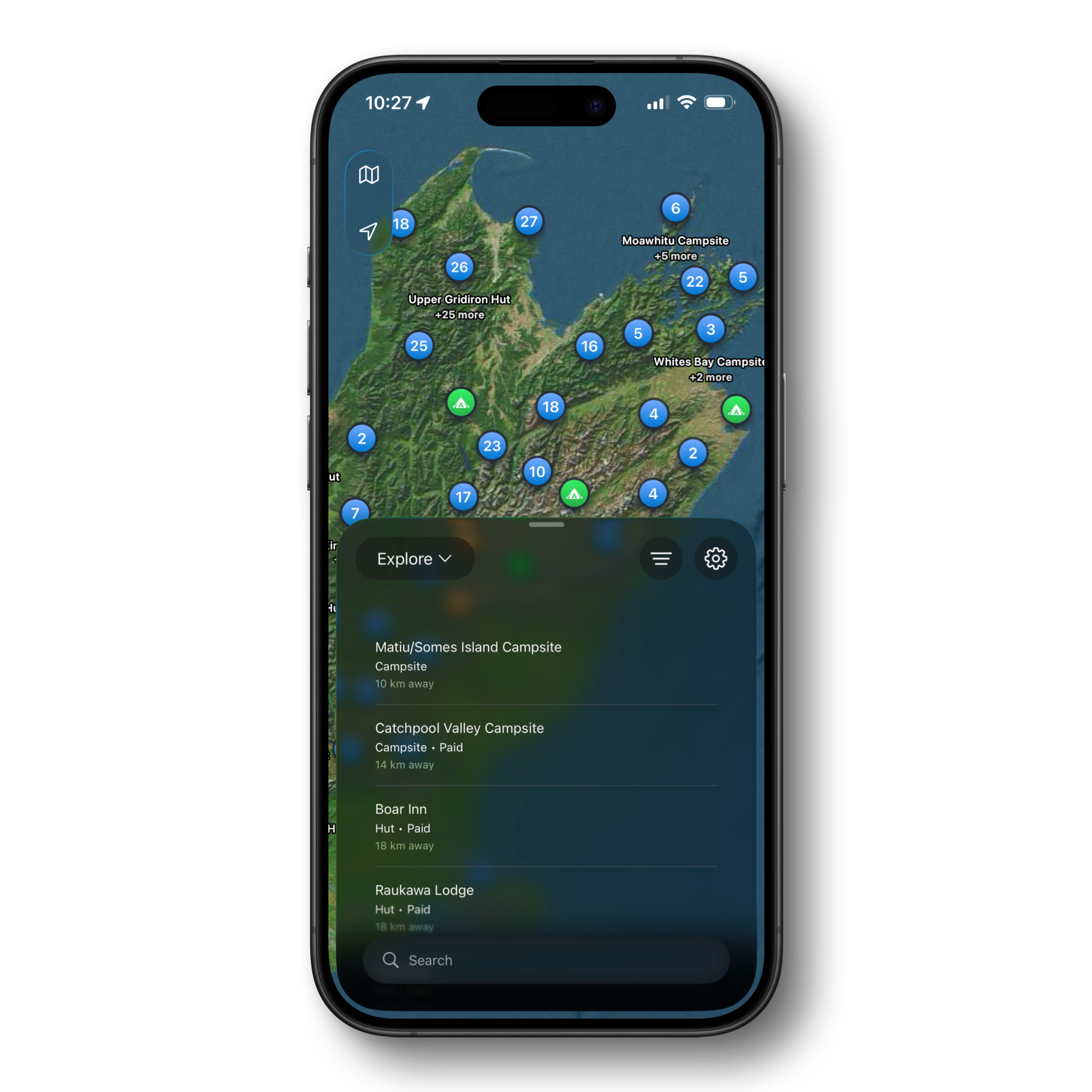
Beach car parks run into DOC notices all the time, so KiwiCamping's DOC campsite and hut data, its freedom-camping notices by district, filters and saved places are the first things to open. Place details, saved places and guides work without signal, while map tiles, routing, weather and photos need it. Council bylaws are not in the app, so the council page decides when the beach is council land.
- Photograph the sign when you arrive
- Do not create an overflow line
- Council bylaws sit with the council
The short version
A beach car park is not a free campsite. It is council land, DOC land or a reserve, and each answers differently: usually no, sometimes yes for certified self-contained vehicles for a few nights, and occasionally yes by permit.
Decide before dark, keep a campground as the fallback, and treat the tide table and the route to high ground as part of the plan rather than an afterthought.
Places along the way
Check before you go
Rules and conditions change. Recheck the official source and the page for your exact park or campground before departure.
- Freedom Camping Act 2011
- Freedom Camping (Penalties for Infringement Offences) Regulations 2023
- Reserves Act 1977, section 44
- Christchurch City Council: Camping and campervans
- Christchurch City Council: Freedom Camping Bylaw 2021
- Christchurch City Council: Tsunami evacuation zones and routes
- Wellington City Council: Freedom camping in Wellington
- Auckland Council: General rules for freedom campers
- Whakatāne District Council: Freedom Camping Bylaw 2024
- Central Hawke's Bay District Council: Freedom camping
- Central Hawke's Bay District Council: Freedom Camping Bylaw 2024
- DOC: Conservation areas where freedom camping is prohibited or restricted
- DOC: Freedom camping on public conservation land
Common questions
Can you camp on the beach in NZ?+
Not freely. Beaches are managed by councils, DOC or private owners, and freedom camping is allowed only where the Act, a bylaw or a DOC notice permits it. Many beachside reserves and car parks prohibit it, some allow certified self-contained vehicles for a few nights, and a few, like Pourerere Beach in Central Hawke's Bay, use a permit ballot over summer.
Can I park overnight at a beach without a self-contained vehicle?+
Usually not on council or DOC land, because the Act allows freedom camping on council land only in tents or certified self-contained vehicles unless a bylaw names the site. The exceptions are rare and carry conditions, such as the two Central Hawke's Bay beaches. A campground or a DOC campsite is the safer option.
Is it legal to sleep on a beach in New Zealand?+
Sleeping in a tent or a vehicle within 200 m of the sea on public land is freedom camping, so those rules apply. Bedding down with no tent or vehicle is outside the Act's definition, but reserves still bar personal accommodation without the Minister's consent, councils and DOC set their own limits, and Auckland allows no tent freedom camping in public places. Ask the owner if the beach is private.