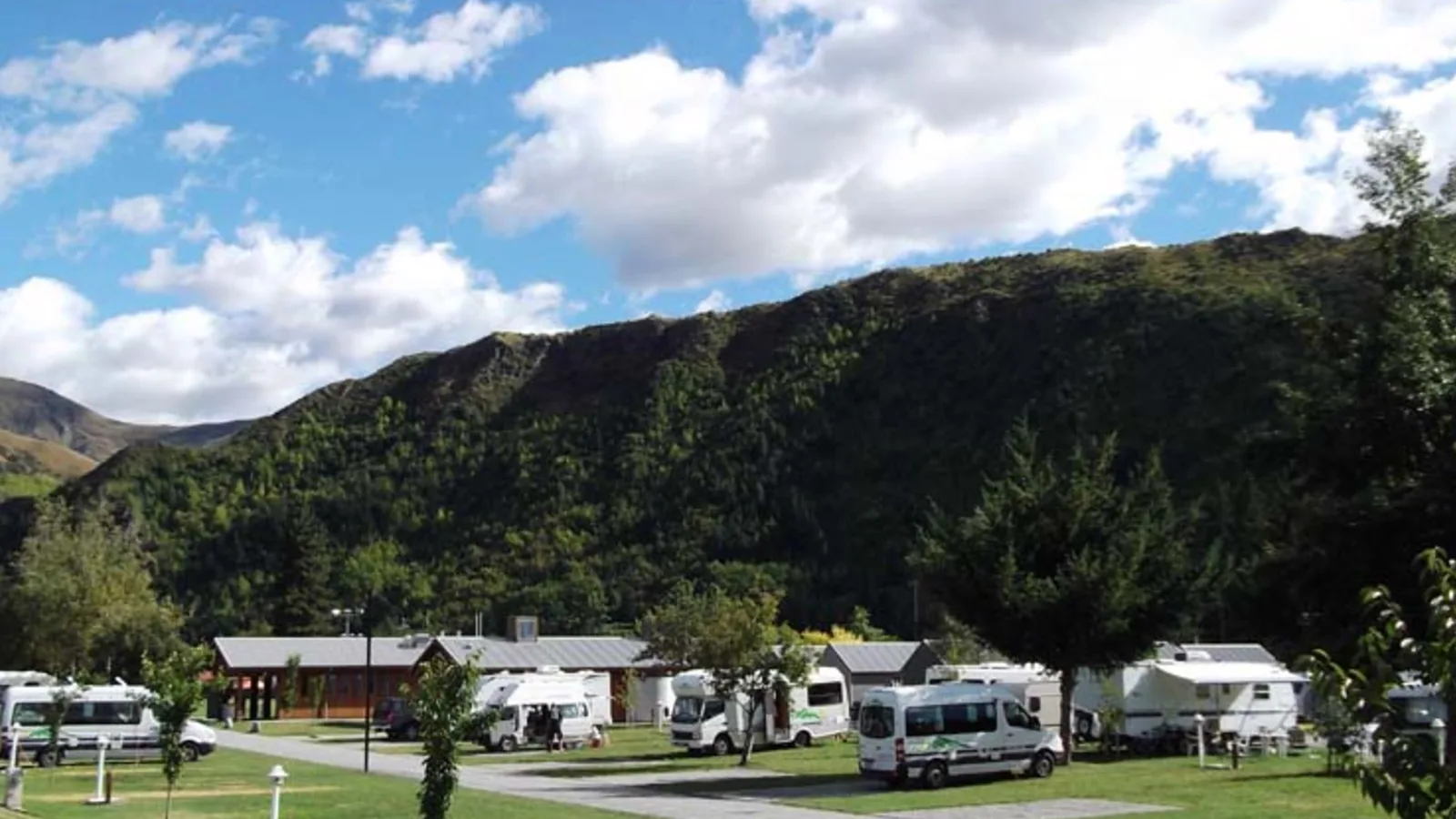
A holiday park is a commercial campground with powered and tent sites, hot showers, a shared kitchen, laundry and usually cabins, and it is the night that resets a camping trip: after a wet week, before an early ferry, or whenever power and a dependable shower matter more than solitude. Most charge per site or per person, so the price only means something for your own party. The industry association, Holiday Parks New Zealand, lists 230 member parks, and the biggest chain, TOP 10, sells a $55 two-year club card that takes 10 percent off each stay. Below: how rates work, what a membership is worth, when to book and how to arrive late without trouble.
Understand how the rate is built
Holiday parks price in three different ways and the comparison collapses if you mix them up. Some charge per person, some per site with a stated occupancy, and some quote a base rate with additional guests charged separately. As an example, a $56 site for two and a $28-per-person rate are the same price for a couple and very different for a family of five.
Then check what is bundled. Power, linen, kitchen equipment, showers, Wi-Fi and booking fees vary between parks, and a cabin quoted without linen is not comparable to one that includes it. Work out the total for your actual party and nights before deciding anything.
- Compare per-person against per-site
- Check whether linen is included
- Include booking and card fees
Holiday park or DOC campsite: cost it for your party
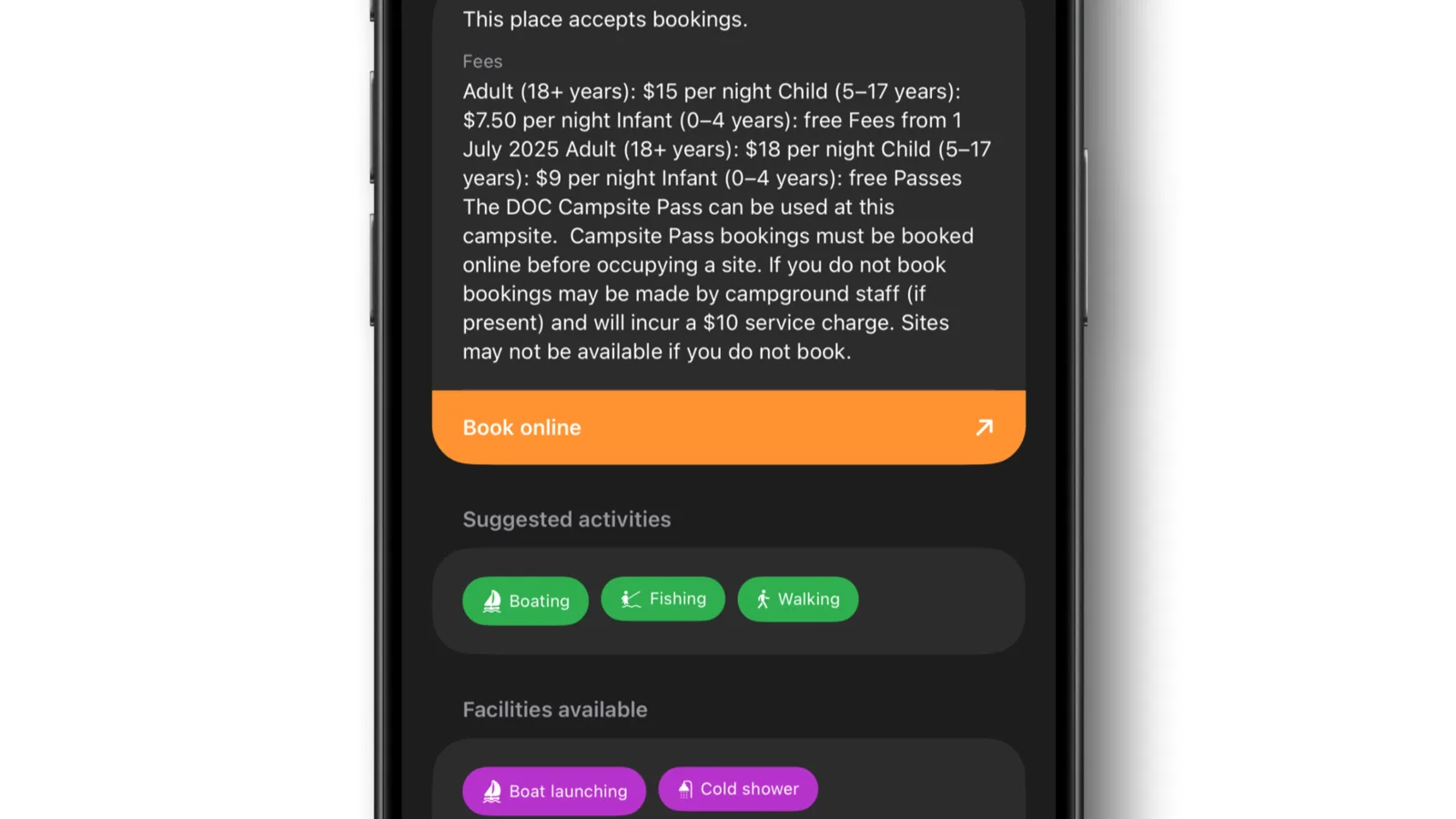
DOC charges per person, so the cheaper option depends on who is travelling. At a serviced DOC campsite an adult pays $25 a night unpowered and a child $12.50, so two adults and two children pay $75. At a standard DOC campsite the same family pays $30 to $60, and at a basic site nothing. Hold that against the park's quoted total for the same night, power and party, not against its headline site price.
For a couple, DOC usually wins on price and a park on facilities. For a family, a park charging per site often closes the gap or beats a serviced DOC ground, and adds laundry, a kitchen, hot showers and somewhere for children to burn off energy. Many trips work best mixing the two: DOC sites for the scenery, a holiday park every few nights for the reset.
- DOC charges per person, parks often per site
- Two adults and two children: $75 at a serviced DOC site
- Mix DOC nights with a park every few nights
Chains, networks and memberships
TOP 10 Holiday Parks is the largest chain. Its club card costs $55 for two years and takes 10 percent off accommodation at TOP 10 parks, capped at $40 a stay, plus 10 percent at more than 130 BIG4 parks across the Tasman, Interislander ferry savings and regional deals. The card pays for itself once your discounts pass $55, which at 10 percent means about $550 of TOP 10 stays over the two years: good value on a long trip, rarely on a weekend.
Holiday Parks New Zealand is the industry association rather than a chain. It lists 230 member parks, many of them independent, and arranges an Interislander discount for its member parks' guests. Motorhome owners who join the New Zealand Motor Caravan Association get its members-only parks and travel directory instead. Independent parks run their own discounts, so ask at booking rather than assuming a card applies.
- TOP 10 Club: $55 for two years, 10% off up to $40 a stay
- It pays off after about $550 of TOP 10 nights
- Independent parks set their own discounts
Book the vehicle you are actually bringing
Site dimensions matter more than travellers expect. A long motorhome, a caravan with an awning or a vehicle towing a trailer needs a site that physically fits, and parks allocate by the length you declared. Under-declaring produces an awkward conversation at check-in and sometimes no site at all.
Say whether you need drive-through access, power, and proximity to amenities if anyone in the party has mobility needs. These are easy to arrange in advance and nearly impossible to fix on a full Saturday in January.
Peak season changes the rules
Between Christmas and late January, and over Easter and school holidays, popular coastal parks can set minimum stays, higher rates and stricter cancellation terms, and the best sites go early. If your route passes through a beach town in that window, book it as early as you book the ferry.
Local events compress availability just as hard and with less warning: a regional sports tournament or a concert can fill every park in a district. Where dates are uncertain, pay for refundable terms and note the cancellation deadline against the trip stop rather than trusting memory.
- Book beach towns very early
- Watch for local events
- Note cancellation deadlines
Arriving after hours
Most parks close reception in the evening, and a long driving day frequently ends after that. Ask for the late-arrival procedure when you book: many leave an envelope with a site number and a gate code, but you need to know that before you are standing at a locked barrier at 10pm with no reception.
Confirm the gate arrangement for vehicles too. Some parks close a boom gate overnight, which matters if you have an early ferry or a dawn start planned.
Use the facilities deliberately
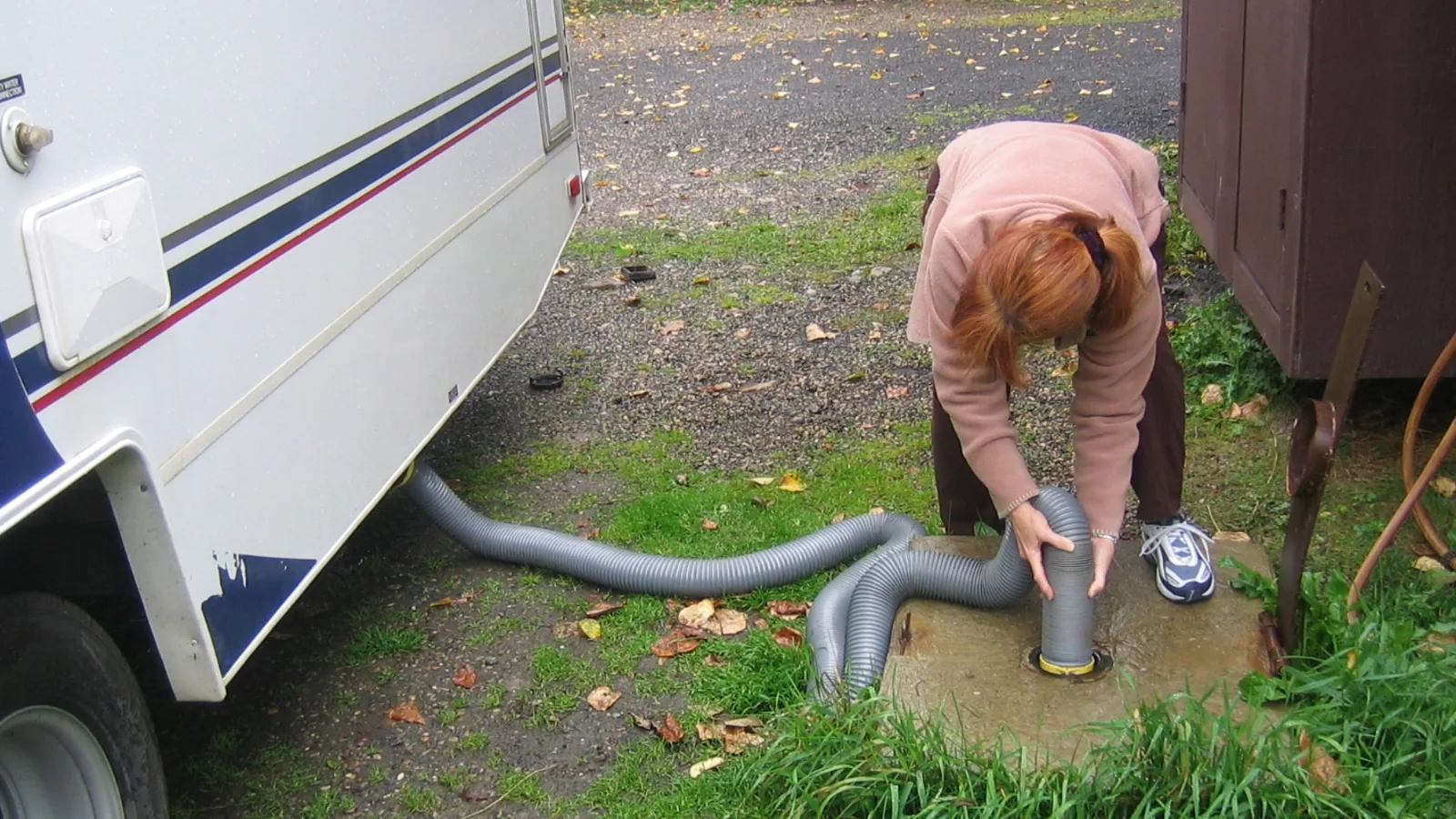
A holiday park night is worth most when you use what you paid for. A communal kitchen saves gas and keeps cooking smells out of a small van, the laundry resets a week of damp clothing, and the dump station and potable water taps let you leave with full tanks and empty ones in the right order.
Learn the layout before connecting anything: never fill drinking water from a tap near the dump point, and ask which taps are potable, because not all of them are. Rinse and stow hoses separately, and wash your hands after handling waste equipment.
- Never fill water near the dump point
- Ask which taps are potable
- Keep hoses separate
Shared space, shared rules
Quiet hours are enforced, and holiday parks are dense environments where sound carries between sites. Keep site boundaries, supervise children around internal roads and pools, and check the pet policy before arriving with a dog, because many parks restrict animals, especially in peak season.
Secure valuables as you would anywhere with public access. A holiday park is convenient and generally safe, but it remains a busy site with vehicles moving through it all day.
Finding and booking parks in KiwiCamping
KiwiCamping shows holiday parks and tours from BookIt on the same map as DOC campsites and dump stations. The BookIt places are free in the app: open one to see its facilities and photos, then use Book now to check live availability and price. That makes it quick to find a powered site within an hour of where you are, even when you are choosing on the road.
DOC campsites, huts, dump stations and DOC's freedom camping notices are part of the Premium pass. Place details are stored on the phone, so you can compare a park against the nearest DOC site without signal, while live availability, maps and booking pages need a connection.
Luoghi lungo il percorso
Controlla prima di partire
Regole e condizioni cambiano. Prima di partire ricontrolla la fonte ufficiale e la pagina del parco o del campeggio in cui vai.
Domande frequenti
What is the difference between a holiday park and a campsite?+
A holiday park is a commercial site with powered sites, showers, kitchens, laundry and usually cabins, priced per site or per person. A DOC campsite is public conservation land with far fewer facilities and a much lower fee.
Is a holiday park membership worth it in New Zealand?+
The TOP 10 Club costs $55 for two years and takes 10 percent off each TOP 10 stay, up to $40 a stay, so it pays for itself once you spend about $550 at TOP 10 parks. That suits a long trip; for a weekend it rarely does.
Portala con te in viaggio
Salva le tappe. Pianifica tutto il viaggio.
Crea un percorso in ordine con i luoghi salvati, calcola la distanza e tieni date, note e cose da fare legate a ogni tappa.