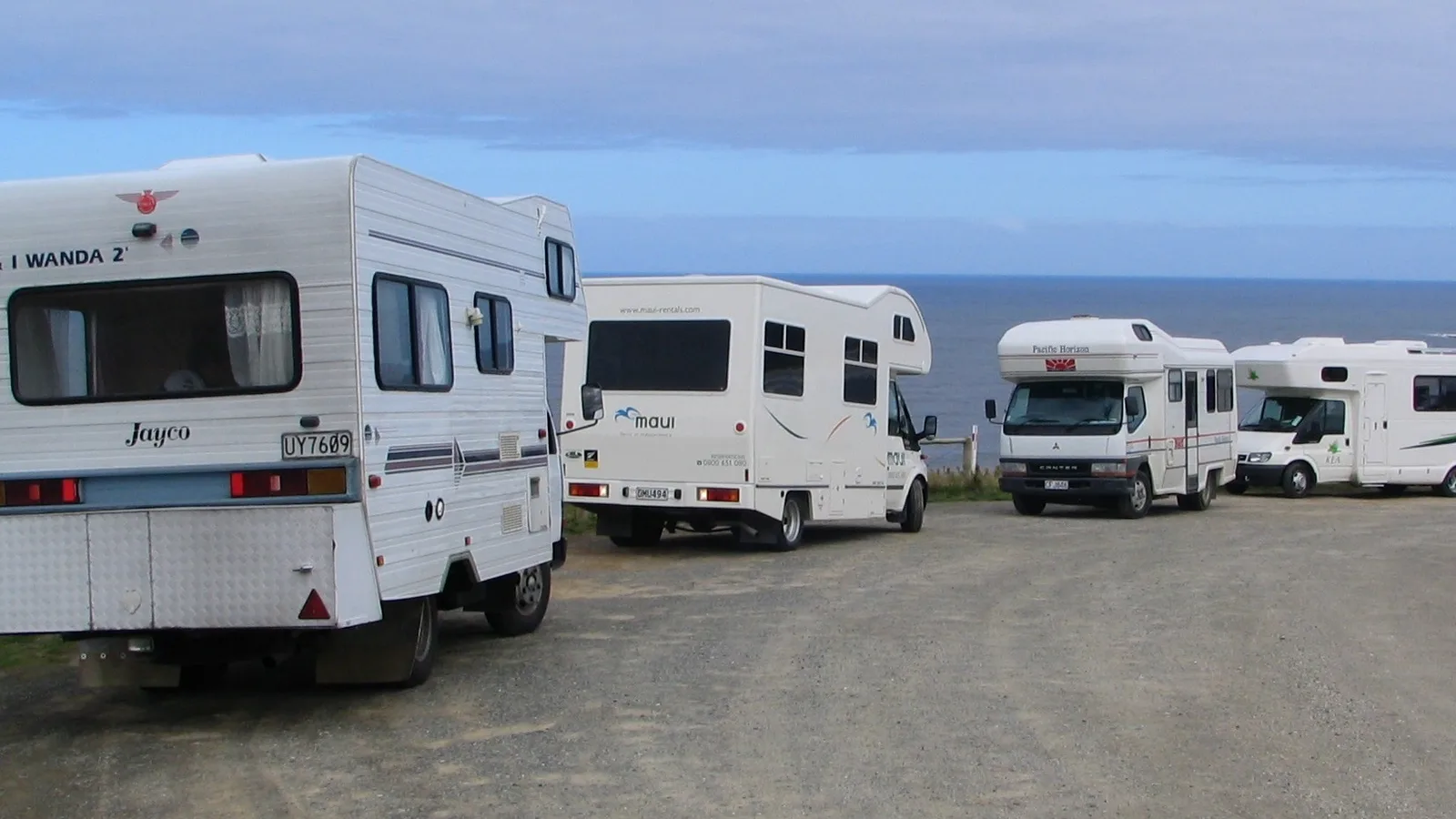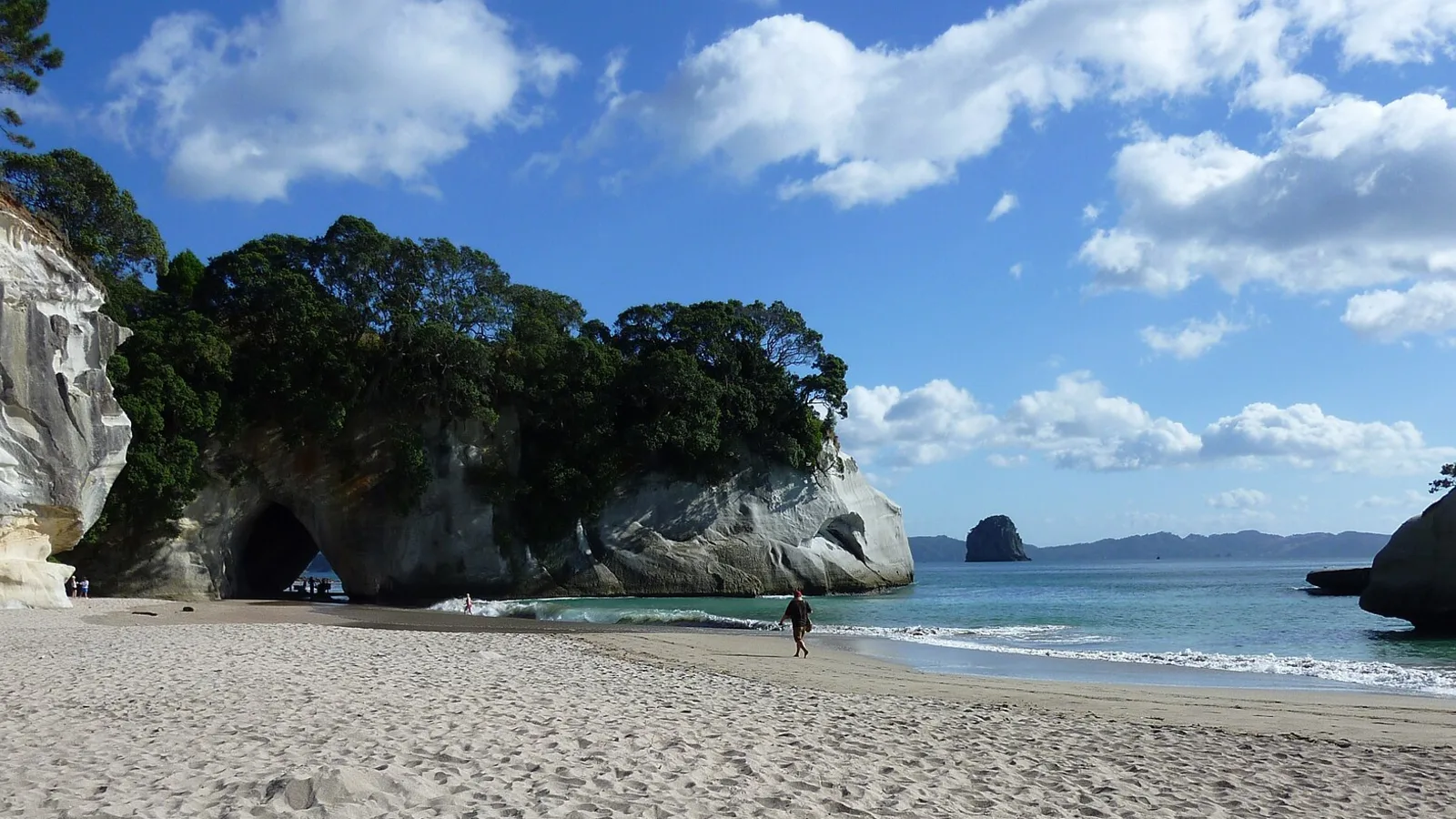
Only certified self-contained vehicles may freedom camp on council land in the Thames-Coromandel District. The council's Freedom Camping Bylaw prohibits it in 84 listed areas and restricts it at 25 more, where a signed designated place and a vehicle limit apply. The general limits are two consecutive nights, only between 5pm and 9am, with the vehicle gone by 9am. The bylaw covers council land only; conservation land on the peninsula is DOC's, and the rules differ.
What the bylaw says
The Freedom Camping Bylaw was made on 7 October 2022 and came into force on 5 December 2022. The council amended it on 8 August 2023 and again on 10 December 2024, when it moved the designated place at Island View Reserve in Whangamatā. The bylaw page says it is due for review by 7 October 2027, and it applies to all local authority areas in the district, meaning land the council controls or manages. It does not cover DOC land, private land or most state highway verges.
Under the bylaw, freedom camping is restricted in every council area, and the rule for all of them is the same: a self-contained motor vehicle must be used, a vehicle must not stay in an area more than two consecutive nights, and freedom camping is only allowed between 5pm and 9am. Where an area has been used overnight, the vehicle must be removed by 9am each day. The council's summary says to look for its signs showing where freedom camping can take place.
- Council land only, not DOC
- Two consecutive nights, 5pm to 9am
- Vehicle gone by 9am
The 25 designated sites and their vehicle limits
Schedule 2 of the bylaw lists 25 areas where freedom camping is further restricted. Where the schedule names a designated place, you may not camp in any other part of that reserve or road, and where it sets a maximum number of vehicles, you may not stay if that many are already there when you arrive. Twenty of the 25 state a vehicle limit; for Egans Reserve, Waikawau South Reserve and Waitoko Stream Esplanades the schedule points to explanatory notes, and Rhodes Park car park and Waiomu Domain state no limit.
Some sites add their own times or nights. Four have a 5pm to 8am window instead of the general 5pm to 9am, Woollams Avenue car park in Coromandel allows one consecutive night, and at Aickin Road Sports Reserve the schedule sets Saturday as the day to leave. A site can be closed at short notice: the bylaw lets the council close or restrict any Schedule 2 area to prevent damage, allow maintenance, protect safety or provide for events, and says it will publicise this by a sign, on its digital channels or radio, or in a public notice.
| Site | Town | Vehicles | Other limits in the schedule |
|---|---|---|---|
| Aickin Road Sports Reserve, area opposite 212A Aickin Road | Whangamatā | 4 | Day to leave: Saturday |
| Beach Road, grass area opposite 305 Beach Road | Whangamatā | 2 | None stated |
| Information Centre car park, 616 Port Road | Whangamatā | 4 | 5pm to 8am |
| Island View Reserve, top car park | Whangamatā | 4 | None stated |
| Brown Street car park | Thames | 4 | None stated |
| Danby Field (Shopper's) car park, 301 Queen Street | Thames | 20 | None stated |
| 520 Mackay Street, bowling club car park | Thames | 3 | 5pm to 8am |
| Rhodes Park car park | Thames | Not stated | Gravel area north of the netball courts |
| Tararū Beachfront North Reserve | Tararū | 4 | None stated |
| Lee Street car park, 2 Lee Street | Whitianga | 8 | None stated |
| TCDC Mercury Bay Area office car park, Monk Street | Whitianga | 4 | 5pm to 8am |
| Whangapoua car park, Tangiora Avenue | Whangapoua | 2 | None stated |
| Omara Reserve | Matarangi | 5 | None stated |
| Coroglen Reserve | Coroglen | 5 | None stated |
| Egans Reserve, The 309 Road | Kaimarama | Not stated | See the schedule's explanatory notes |
| Kapanga Road car park | Coromandel Town | 6 | None stated |
| Woollams Avenue car park | Coromandel Town | 4 | 5pm to 8am; one consecutive night |
| Whittle Reserve | Colville | 4 | None stated |
| Ocean Beach (South End) | Pāuanui | 4 | None stated |
| Royal Billy Point and Te Karaka Reserve | Pāuanui | 3 | None stated |
| Tangimoana Esplanade Reserves, Paku Drive | Tairua | 5 | None stated |
| Tui Terrace and Wharf Road | Tairua | 2 | None stated |
| Waitoko Stream (Grahams Creek) Esplanades | Tairua | Not stated | See the schedule's explanatory notes |
| Waikawau South Reserve, State Highway 25 | Waikawau | Not stated | See the schedule's explanatory notes |
| Waiomu Domain and Reserves | Waiomu | Not stated | North western corner car parking area |
- Stay in the signed designated place
- A full site means you cannot stay
- Sites can close for events or maintenance
Check the campsite before you park
Where freedom camping is prohibited
Schedule 1 lists 84 prohibited areas across Thames, Mercury Bay, Coromandel and Colville, Tairua and Pāuanui, and Whangamatā. They include the whole of Hāhei and Hot Water Beach settlements (all road reserves and council reserves), The Esplanade and the Dundas Street boat ramp area in Whitianga, Esplanade Drive and the library and area office car park in Whangamatā, Waterways Parade and Kennedy Park in Pāuanui, and Long Bay Road, Pottery Lane and Woollams Avenue's road reserve in Coromandel Town. In Thames the list includes the library car park at 505 Mackay Street and the council office car park next to it.
Reserves need a second rule. The bylaw's explanatory notes say freedom camping on reserves is prohibited under section 44 of the Reserves Act 1977 and so under section 10 of the Freedom Camping Act, except in the designated places on reserves named in Schedule 2. The schedule lists some reserves but not all, so a reserve that is not on either list is still not a place to camp. The council publishes five area maps (Coromandel-Colville, Mercury Bay, Tairua-Pāuanui, Thames and Whangamatā), but the bylaw says the maps are for reference only and that the written schedules prevail if they differ.
- 84 prohibited areas in Schedule 1
- A reserve not on the list is still prohibited
- The written schedule beats the map
Tents and vehicles without certification
The bylaw has no place for a tent. Its definition of freedom camping covers camping with a tent or other temporary structure or with a motor vehicle, but the restriction on every council area requires a self-contained motor vehicle, and the council's summary says to freedom camp only in a certified self-contained vehicle. A motor vehicle under the bylaw also includes a unit used for camping that is not itself a vehicle but can be carried on one.
Self-contained means the vehicle has a valid certificate of self-containment under the Plumbers, Gasfitters, and Drainlayers Act 2006. The bylaw text still refers to the transitional periods for older certification, but under the national rules blue self-containment warrants stopped counting on 7 June 2026, so carry a green warrant and display the card. If you have a tent, a non-certified van or a vehicle with a portable toilet, you need a campground, a holiday park or a DOC campsite.
- No tents on council land
- Green warrant only since 7 June 2026
- Otherwise use a campground or DOC campsite
Fines and the council's approval process
A breach of the bylaw is an infringement offence under the Freedom Camping Act, including making preparations to freedom camp. The fees come from the Freedom Camping (Penalties for Infringement Offences) Regulations 2023: $400 for freedom camping in breach of a bylaw prohibition or restriction, $400 for using a vehicle that is not self-contained other than where permitted, $400 for a self-contained vehicle with more people than it is certified for, $200 for failing to display a warrant card, $600 for failing or refusing to leave when an enforcement officer requires it, and $800 for damaging the area or depositing waste in or on it. The notice can go to the registered owner of the vehicle or the person lawfully in possession of it, which for a rental is usually the hire company.
The council can approve freedom camping in a prohibited or restricted place, but only for a special event or occasion, where there is a good reason that cannot reasonably be met in a permitted area, or where a restriction cannot reasonably be met. The application must be made at least 30 days ahead, with the fee in the council's schedule of fees and charges, and the council can grant or decline it at its discretion. A visitor camping for a night or two will not meet those tests, so treat the approval route as meant for events.
- $400 for most breaches
- $800 for waste or damage
- Approvals need 30 days' notice
Council land and DOC land on the Coromandel
These rules cover council land. DOC runs the campgrounds on the northern and eastern coast of the peninsula and the Coromandel Forest Park, and KiwiCamping's DOC data (11 August 2026) lists 20 DOC campsites in the Coromandel region, 19 of them bookable online through DOC, with adult nightly rates from $10 to $23 and Waikawau Bay Campsite the largest. DOC lists current prohibited freedom camping notices in the district, including at Cathedral Cove Carpark in Whitianga and Kauaeranga Roadend Carpark in Hauraki, which are DOC notices rather than council bylaws.
For a bed with power and showers, the peninsula's holiday parks fill in summer. The guide to holiday parks in New Zealand explains how to book them, and the guide to DOC campsites explains DOC's booking rules. At New Year the council's alcohol ban also applies, which the New Year's Eve guide covers; the bylaw above is about where you can park the vehicle, not about drinking.
- DOC campsites: book through DOC
- Cathedral Cove carpark is a DOC notice
- Alcohol bans are a separate rule
Using KiwiCamping on the Coromandel
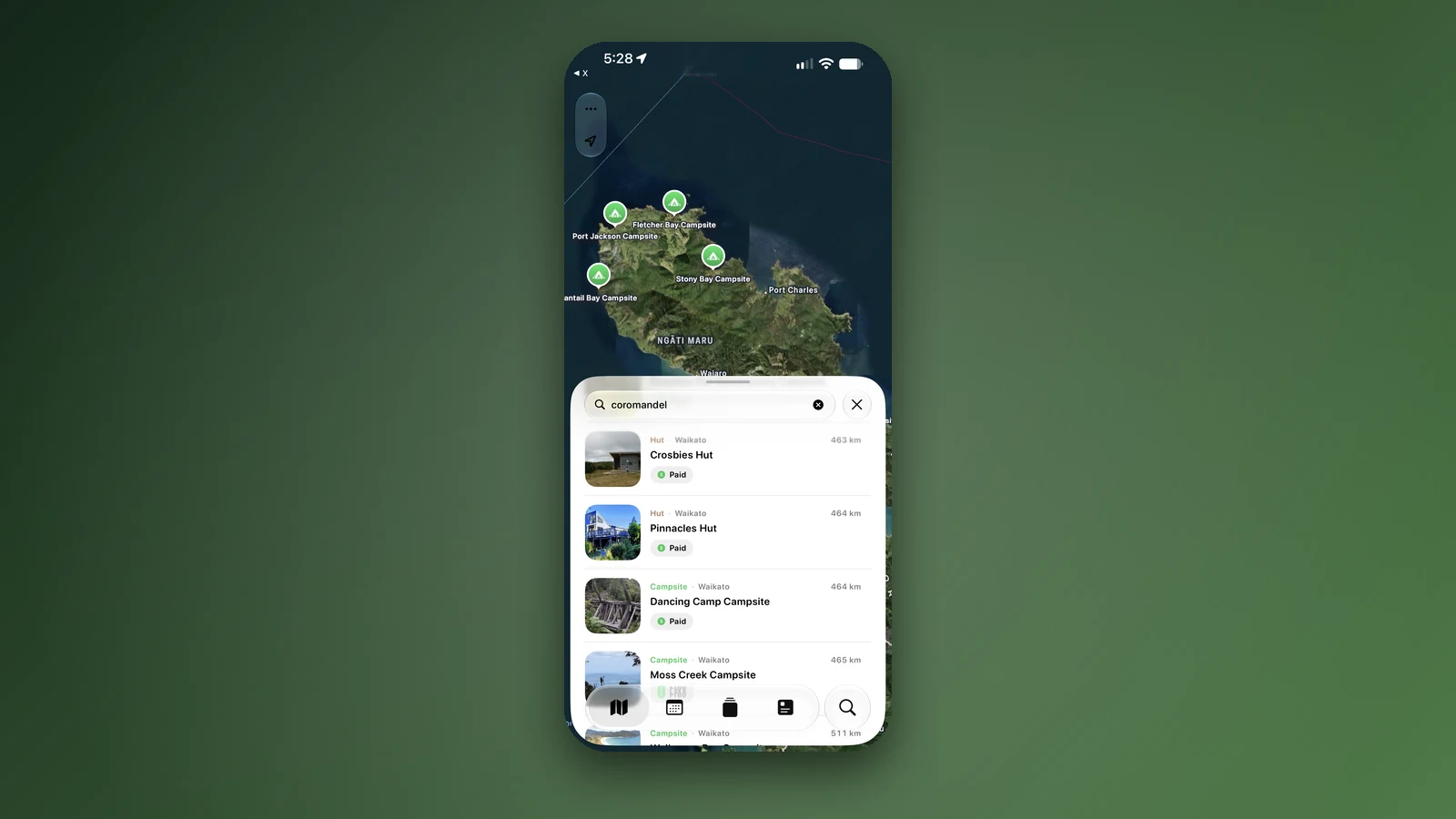
KiwiCamping shows the DOC campsites and huts on the peninsula with their category, fee notes and facilities, and the satellite and map views show the coast between Thames and Whangamatā. It does not hold the council's freedom camping sites or the bylaw maps, so check the council's page and the sign on the day. Offline, the app keeps place details, saved places and guides; map tiles, routing, weather and photos want signal.
Save the places you might use, add a campground as the fallback for each night, and order them in a trip with dates and notes. The trip adds up the distance between legs and shows a forecast at each stop. Free to download, with in-app purchases.
- Save a campground as the fallback
- Check the council page for the night
- Core place details work offline
Places along the way
Check before you go
Rules and conditions change. Recheck the official source and the page for your exact park or campground before departure.
Common questions
Can I freedom camp in a tent on the Coromandel?+
Not on council land. The council's bylaw requires a self-contained motor vehicle for freedom camping in every council area, so a tent camper needs a holiday park, a campground or a DOC campsite.
How many nights can I freedom camp in Thames-Coromandel?+
The general limit is two consecutive nights, between 5pm and 9am, with the vehicle removed by 9am. Woollams Avenue car park in Coromandel Town allows one consecutive night, and Aickin Road Sports Reserve in Whangamatā has Saturday as its day to leave.
Where can I freedom camp in Whitianga?+
The bylaw's Schedule 2 names two Whitianga sites: Lee Street car park with a limit of 8 vehicles, and the council's Mercury Bay Area office car park on Monk Street with 4 vehicles between 5pm and 8am. The Esplanade and the Dundas Street boat ramp area are prohibited.
What is the fine for freedom camping in Thames-Coromandel?+
Most breaches of the bylaw carry a $400 infringement fee under the national regulations. A missing warrant card is $200, and damage or leaving waste is $800.

Find a legal night
Know where you can stay tonight.
Free to download. BookIt holiday parks and tours are free to browse and book; DOC campsites, huts, dump stations, the in-app guides and trip planning need the Premium pass.
KiwiCamping is an iPhone app. There is no Android version.