Fuel turns itinerary design into a measurable cost. On 26 July 2026, MBIE's representative national board price for regular 91 petrol was $2.96 per litre after an unusually volatile year.
Tableau des prix en 10 devises
The petrol benchmark is the official MBIE week ending 26 July 2026. Route examples are mechanical calculations before remote price variation.
| Poste | NZD | USD | GBP | AUD | JPY | EUR | CNY | KRW | INR | SGD |
|---|---|---|---|---|---|---|---|---|---|---|
| Regular 91 petrolper litre | $2.96 | US$1.74 | £1.29 | A$2.46 | JP¥277 | €1.51 | CN¥12 | ₩2,461 | ₹166 | SGD 2.23 |
| 500 km at 9 L/100 km45 litres | $133 | US$78 | £58 | A$111 | JP¥12,462 | €68 | CN¥528 | ₩110,756 | ₹7,466 | SGD 100 |
| 1,000 km at 11 L/100 km110 litres | $326 | US$191 | £142 | A$271 | JP¥30,463 | €166 | CN¥1,290 | ₩270,736 | ₹18,250 | SGD 245 |
| 3,000 km at 12 L/100 km360 litres | $1,066 | US$626 | £463 | A$886 | JP¥99,697 | €542 | CN¥4,221 | ₩886,046 | ₹59,727 | SGD 802 |
Les montants en devises sont des conversions automatiques de la référence en NZD, et non des cotations de carte ou d’espèces. Les banques et les prestataires de paiement appliquent leurs propres taux et frais.
Calculate the actual vehicle
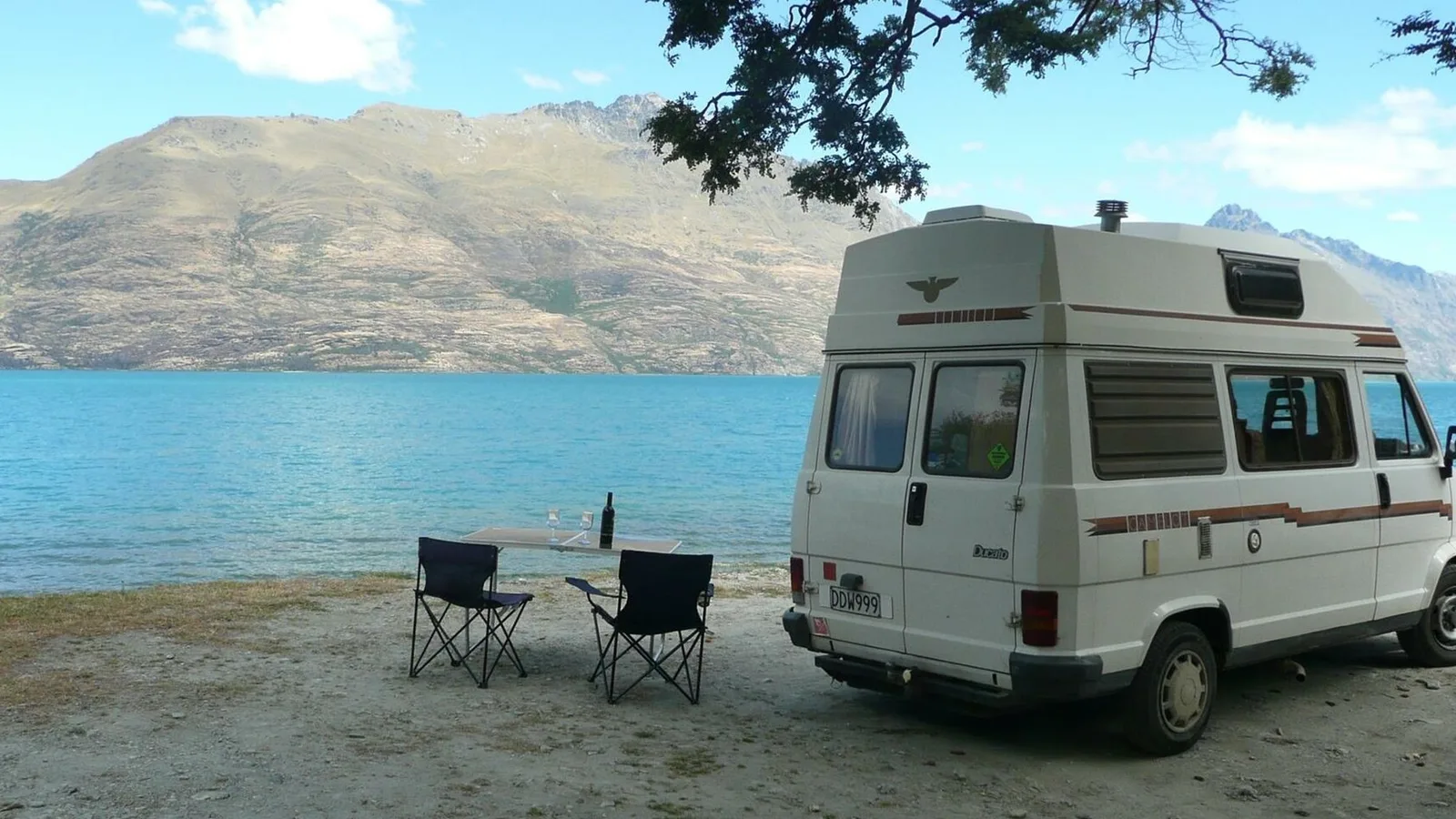
Multiply kilometres by litres per 100 kilometres, divide by 100, then multiply by the price per litre. Use the loaded campervan's likely consumption, not a small-car average.
Add detours and local driving. A 2,000-kilometre route can produce several hundred extra kilometres through camps, shops and viewpoints.
Allow for geography
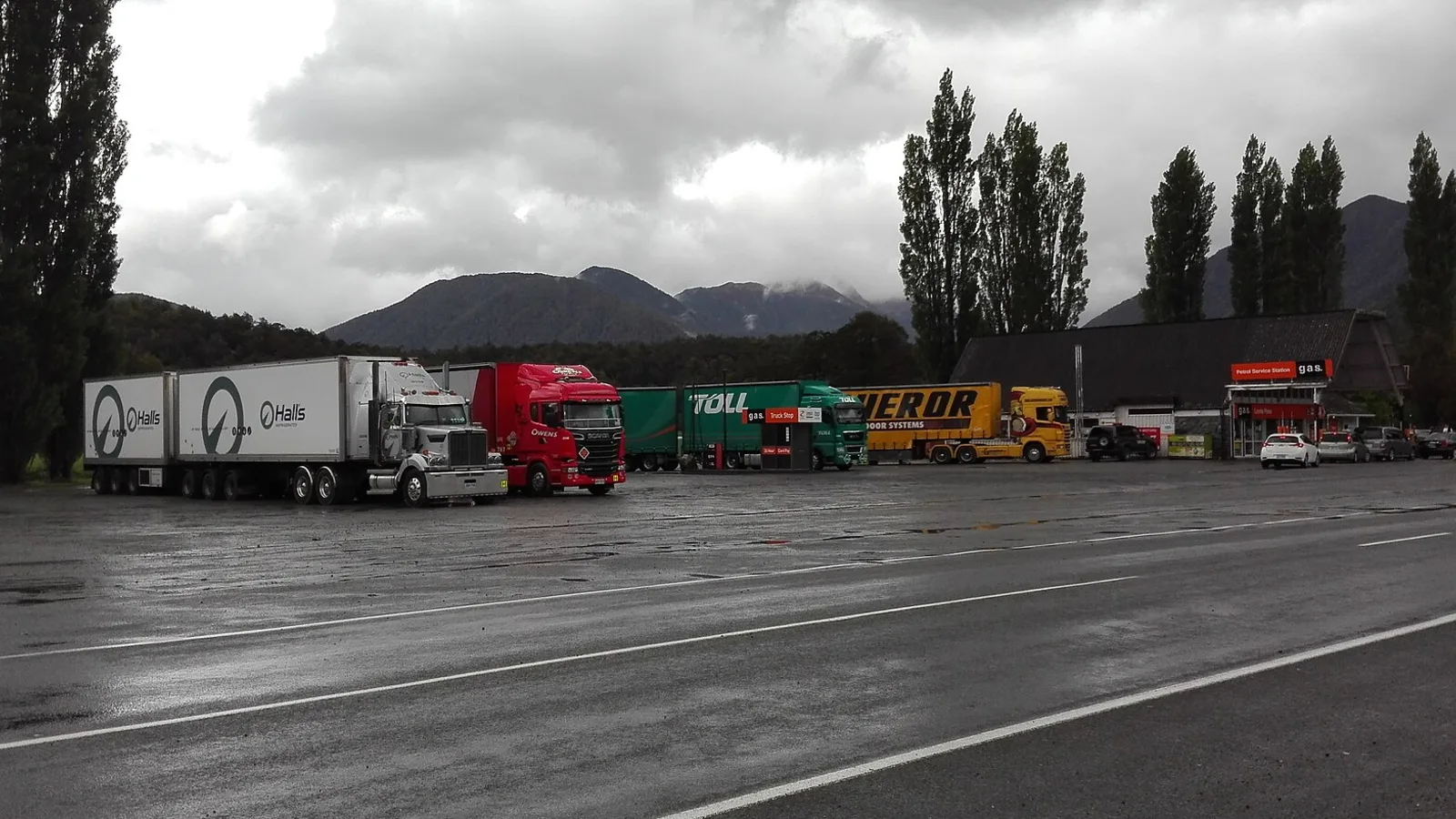
Remote stations and tourist corridors can charge more than the national benchmark. Fill before long gaps and do not pass dependable fuel for a minor expected saving.
Headwind, mountain roads, roof equipment and load increase consumption. Update the estimate after the first two tanks.
Treat volatility honestly
Stats NZ reported petrol prices up 20.1 percent in the June 2026 quarter, while MBIE noted unusual international-market volatility. A stale figure can quickly understate the route.
Use the fuel calculator with today's board price and keep a margin for the remote leg.
Petrol, diesel and road user charges
Diesel is cheaper per litre at the pump, but diesel vehicles pay road user charges separately, bought in advance per thousand kilometres. If you are hiring, check whether RUC is included in the daily rate or billed at the end, because it materially changes the comparison with petrol.
For a private vehicle, RUC must be current for the distance you drive and is enforced. Buying it is straightforward online or at a licensing agent, and running past your purchased distance carries a penalty.
- Diesel pays RUC on top of fuel
- Ask whether hire rates include RUC
- Keep RUC ahead of your odometer
Where fuel costs most
Prices are lowest in the main centres and around competitive suburban sites, and highest on remote stretches with a single operator. The West Coast, Fiordland, the East Cape, inland Otago and the far north all carry a premium, sometimes a large one.
That premium is not a reason to run the tank low. The cost of filling twenty litres at a higher price is trivial compared with running out somewhere with no reception, and the stations that charge most are usually the ones with no competitor for a hundred kilometres.
What actually changes consumption
Load, roof boxes, headwind, sustained hill climbing and speed all matter, and a loaded campervan into a Canterbury nor'wester can use a quarter more than the brochure figure. Air conditioning has a small effect; idling the engine to run heating has a larger one than most people assume.
Tyre pressures matter and should be set for the loaded vehicle, not the empty one. Rental campervans frequently arrive underinflated, which costs fuel and handling at the same time.
- Set pressures for the loaded vehicle
- Headwind costs more than aircon
- Roof boxes are expensive at speed
Reduce the bill without cutting the trip
The largest saving available is fewer unnecessary kilometres. Grouping nearby stops, avoiding a backtrack and accepting that you cannot see both islands properly in ten days will save more than any amount of careful driving technique.
After that, steady speeds and early braking help modestly. What does not help is coasting in neutral, which is both illegal in effect and unsafe, or carrying fuel in unsuitable containers.
Loyalty schemes and where to fill
The main fuel retailers run discount schemes linked to supermarket spending, and the vouchers stack with some card offers. On a long trip these produce a real saving, though never enough to justify driving past the last station before a remote leg.
Unstaffed automated stations are common in small towns and are usually cheaper, but some reject foreign cards. Have a backup card and do not arrive at one with an empty tank late at night expecting it to work.
Prices vary noticeably between towns even within a region. In the main centres it is worth filling before heading out rather than at the last suburban station, which is frequently the most expensive one on the route.
Lieux sur le trajet
À vérifier avant de partir
Les règles et les conditions changent. Revérifiez la source officielle et la page de votre parc ou de votre camping précis avant de partir.
Questions fréquentes
How much does fuel cost in New Zealand?+
The guide gives a dated price per litre for petrol and diesel and works it through real routes. Prices climb noticeably in remote areas, and diesel vehicles also pay road user charges, which people forget to budget.
How do you estimate fuel for a New Zealand road trip?+
Take the route distance, add a third for detours and terrain, then divide by your vehicle's real consumption rather than its brochure figure. A campervan into a headwind on a hilly highway will not meet its rated economy.
Emportez-le sur la route
Enregistrez les étapes. Planifiez tout le voyage.
Construisez un itinéraire ordonné à partir des lieux enregistrés, calculez la distance et gardez dates, notes et check-lists attachées.