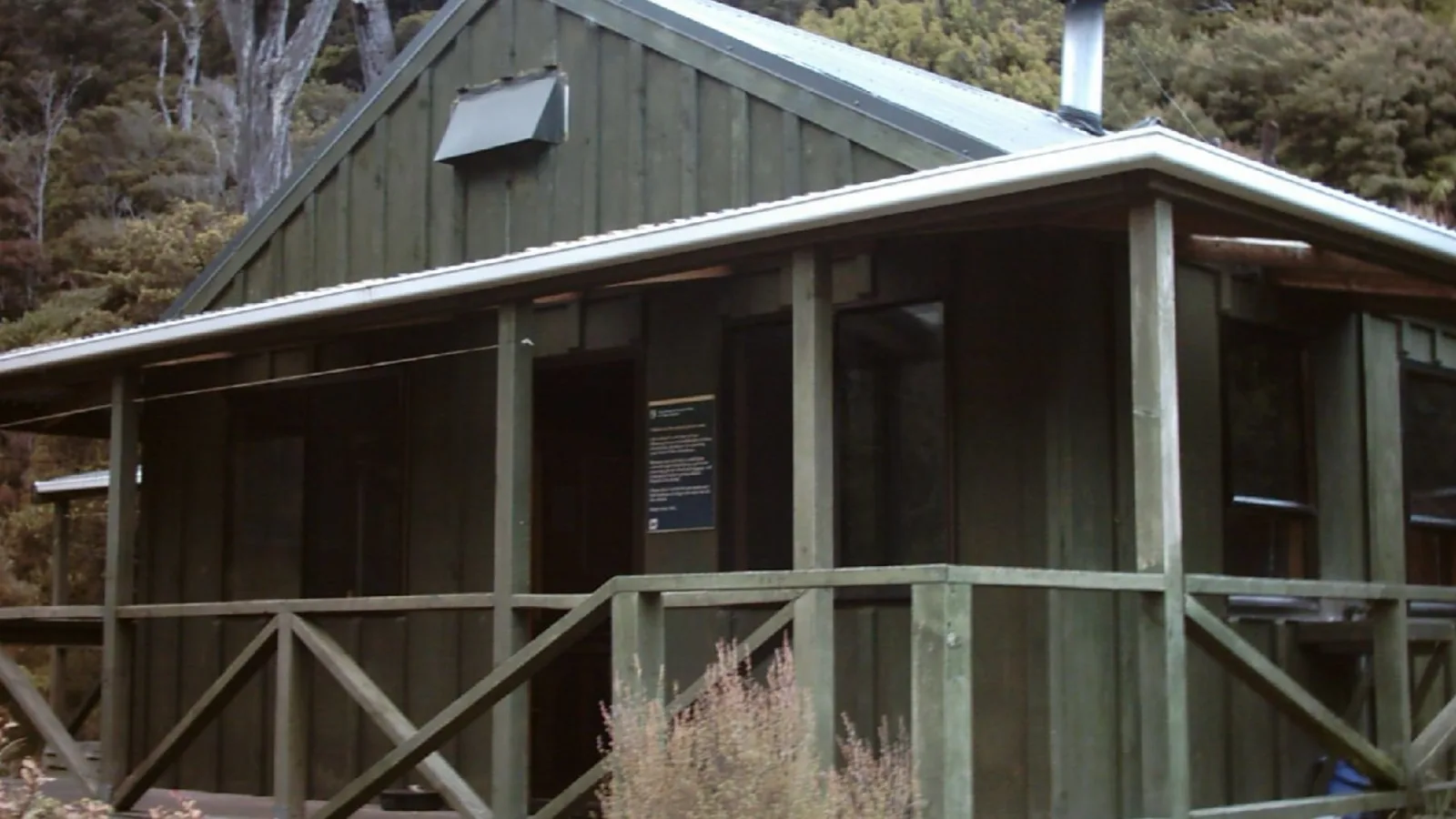
A hut is shared shelter in the backcountry, not accommodation hidden in the bush. Around 950 of them sit across public conservation land, and they range from a serviced building with heating and mattresses to a two-bunk shell with a dirt floor. Knowing which category you are walking towards decides what you carry.
The four hut categories
Serviced huts are the most equipped: mattresses on bunks, a water supply, toilets, and usually heating with fuel provided. Standard huts drop the heating fuel and sometimes the mattresses, but keep bunks, water and a toilet. Basic huts are shelter and little else, and may have no water source at all.
Great Walk huts sit outside this ladder. They are serviced to a high standard during the walking season, cost considerably more, and operate on their own booking system tied to the specific track. Outside the season they typically revert to a lower standard at a lower price, with facilities reduced or removed.
- Category predicts facilities and fee
- Great Walk huts book separately
- Basic huts may have no water
Facilities never replace what you carry
A roof does not remove the need for a sleeping bag, a mat, a stove, fuel, food, a head torch and warm layers. Huts are not staffed, they do not hold supplies, and a serviced hut with a fire is still cold if the previous party used the last of the wood.
Pack for the walk and the weather rather than for the hut description. New Zealand alpine conditions turn fast, and the party that arrives wet with no spare warm layer is in trouble regardless of what the building offers.
Hut tickets, passes and bookings
Non-bookable huts generally use hut tickets bought in advance, or a Backcountry Hut Pass covering a period rather than a night. Bookable huts need a named reservation for the correct date, and Great Walk huts book out months ahead for the summer season.
The common mistake is treating a pass as a booking. A Backcountry Hut Pass pays your way into huts that accept tickets; it reserves nothing and does not apply to Great Walk or other bookable huts. Read which system the specific hut uses before you leave.
- A pass is not a reservation
- Buy tickets before the track
- Great Walk huts sell out months ahead
Nobody is turned away
Bunks in non-bookable huts are first come, and the long-standing convention is that a full hut means floor space rather than a closed door. Do not walk on into darkness because the bunks are taken, and do not expect a bunk to be held for you because you booked a different hut.
Carry a mat and the means to sleep on the floor, and where the weather allows it and the site permits camping, a tent gives you a genuine alternative. On popular tracks in January, assume the hut will be full and plan accordingly.
Water, cooking and fire
Treat hut water unless current DOC information for that hut says it is safe to drink. Roof-collected supply can be contaminated, and giardia is present in New Zealand backcountry water. Boiling, filtering or chemical treatment all work; assuming is what causes problems.
Cook on your own stove, outside or in the designated area, and never inside a tent. Where a fire is provided, use it sparingly and restock the kindling for whoever arrives next in worse weather than you had.
- Treat the water unless told otherwise
- Carry a stove regardless
- Restock kindling before you leave
Hut etiquette
Boots off inside. Keep your gear consolidated on your bunk rather than spread across the table and benches. Be quiet early and move quietly in the morning, because trampers start before dawn and the whole party sleeps in one room after a hard day.
Fill in the hut book, every time, including the date and your intentions. It is a courtesy, but more importantly it is the first thing search and rescue reads when someone is overdue, and an accurate entry has shortened many searches.
Leaving the hut
Sweep the floor, close the shutters and doors properly, and carry out everything you carried in, including food scraps. Rubbish left in a hut attracts rodents, and there is no collection service; whatever you leave stays until another walker removes it.
Report damage, a broken stove, a failed water supply or a hazard to DOC after your trip. Huts are maintained on the basis of what gets reported, and a five-minute message can prevent the next party arriving to a building that does not work.
- Carry out all rubbish and scraps
- Close shutters and doors
- Report damage to DOC afterwards
Lieux sur le trajet
À vérifier avant de partir
Les règles et les conditions changent. Revérifiez la source officielle et la page de votre parc ou de votre camping précis avant de partir.
Questions fréquentes
Do you need to book a DOC hut?+
It depends on the category. Great Walk and Serviced huts on popular tracks are booked and paid for in advance, often months ahead in summer. Standard and Basic huts generally work on hut tickets or a Backcountry Hut Pass with no booking, and a bunk is never guaranteed.
What is actually provided in a backcountry hut?+
Usually bunks with mattresses, a water supply of some kind and a toilet. Cooking facilities, heating and lighting vary by category and many huts have none, so carry a stove, fuel and a light regardless of what the listing says.
Emportez-le sur la route
Enregistrez les étapes. Planifiez tout le voyage.
Construisez un itinéraire ordonné à partir des lieux enregistrés, calculez la distance et gardez dates, notes et check-lists attachées.